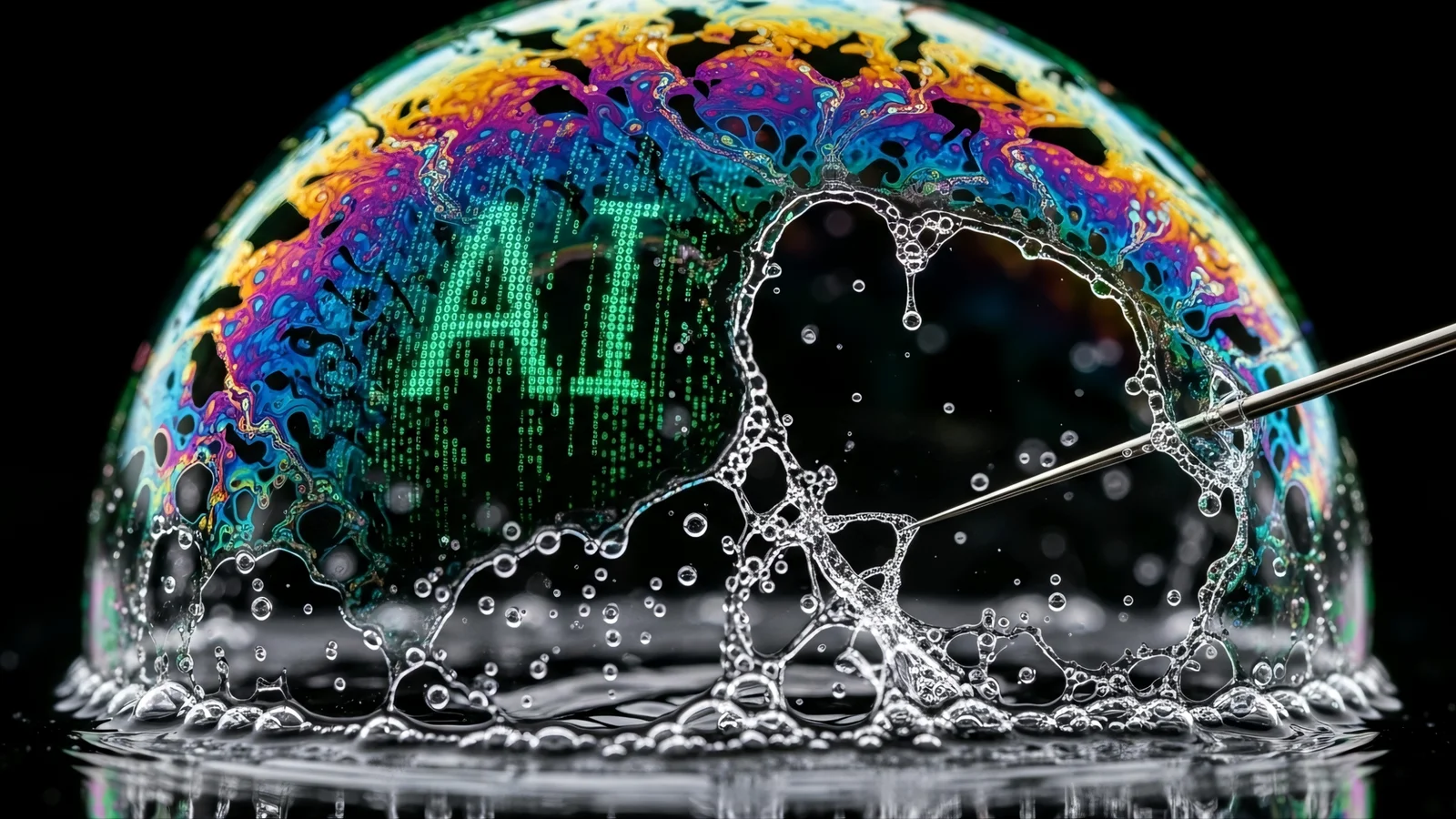
Michael Burry posted three charts making the AI bear case. Two of them show the selling already happened.
Burry shared three Bloomberg charts on the AI trade. One maps the circular deals around Nvidia (NVDA). The other two show big tech forward multiples back at or below their 10-year averages, with Apple (AAPL) the lone expensive name and the only megacap missing from the circular map.
Korea's Kospi fell 10.84% and halted trading. Nvidia (NVDA) is flat and Micron (MU) is down 10% (July 28, 2026)
Korea's Kospi closed at 6,023.66 on Tuesday, down 10.84%, its fourth largest one-day fall on record, after Korea Exchange stopped all trading for 20 minutes. Samsung and SK Hynix each lost more than 13%. The US carryover went into memory and storage, with Sandisk (SNDK) down 14.52% and Micron (MU) down 9.54%, while Nvidia (NVDA) held flat and the Dow rose.

Anthropic says it never asked to ban open-weight AI. Dario Amodei does want China cut off from Nvidia (NVDA) chips.
Dario Amodei answered the Nvidia-hosted open-weights letter on July 27, three days after Anthropic became the only major AI lab to skip it. He says a ban was never the ask. What he does want is China cut off from US chips, a crackdown on industrial-scale distillation, and mandatory safety testing for every capable model, open or closed.
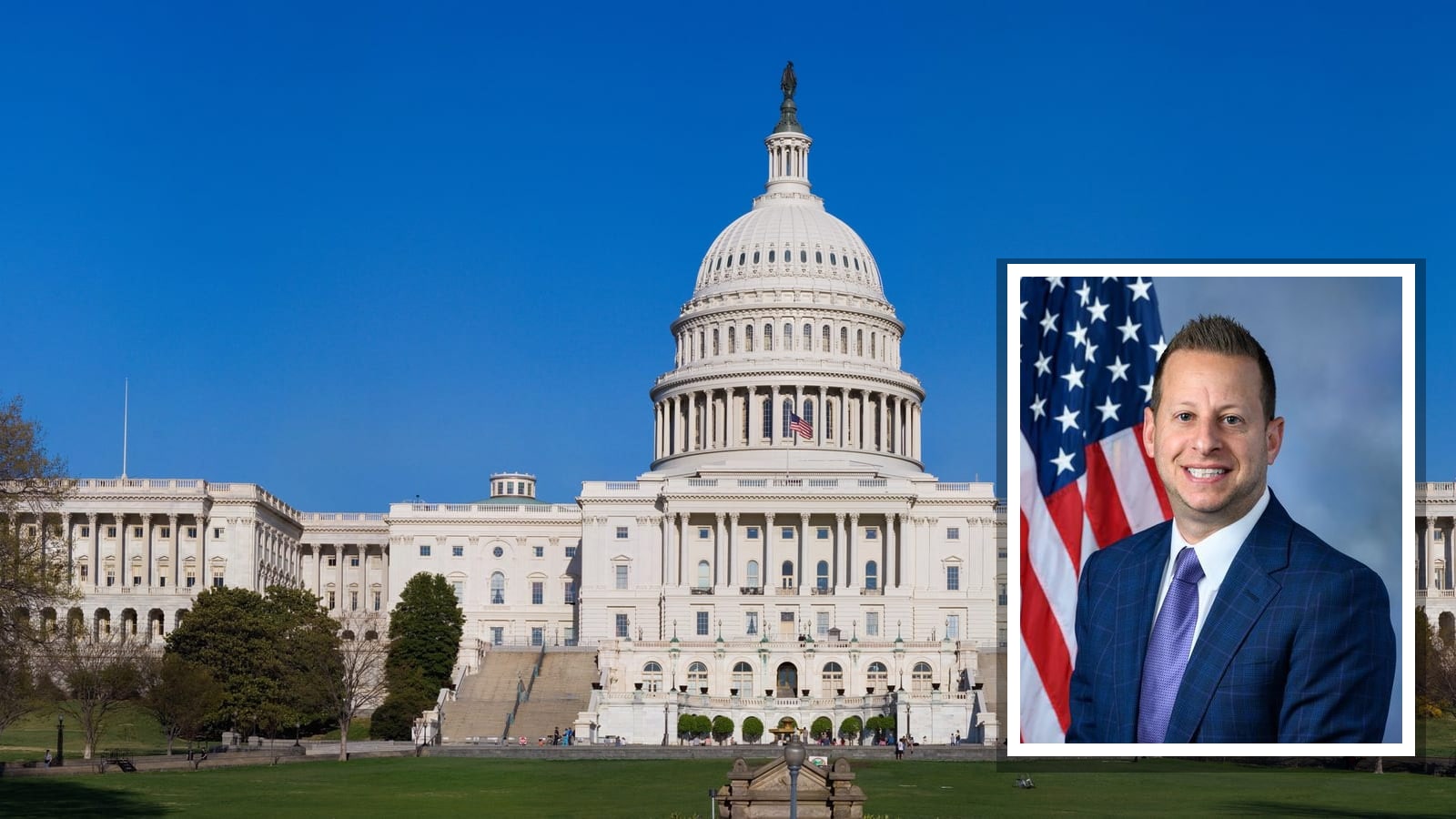
Rep. Jared Moskowitz bought SpaceX on its first day of trading. The disclosure landed 44 days later, with the stock down 29%.
Rep. Jared Moskowitz disclosed a $1,001 to $15,000 purchase of SpaceX (SPCX) dated June 12, 2026, the stock's first day of trading. It has fallen about 29 percent since, and the one stock he sold that week is the best performer in the filing.
About $25 billion of Microsoft's (MSFT) AI budget is memory getting more expensive. Wednesday says whether that grew.
Microsoft told investors in April it would spend about $190 billion on capital projects this year. Around $25 billion of that increase bought nothing new, it was the same buildout at a higher price after memory costs rose. Microsoft reports Wednesday after the close, two hours after the Fed decision.
Nasdaq futures were up over 1% and things looked good. Then chips tanked and took the whole gain with them, led by ASML, Micron (MU) and Nvidia (NVDA) (July 27, 2026)
Futures pointed to a strong open on the Iran ceasefire and a 6.79% drop in oil. QQQ opened up 1.09% and was negative within the hour. Three chip headlines did it, and two of them came out of China: a domestic DUV lithography report that hit ASML, and CXMT's Shanghai debut that hit Micron.
Nvidia (NVDA) is in talks to guarantee $250 billion of OpenAI's data center financing. The chips are another $350 billion.
The Wall Street Journal reported Sunday evening that Nvidia is in talks to guarantee about $250 billion of OpenAI's financing for a 10 gigawatt campus in southern Ohio. The guarantee would cover lease and construction costs, not chips, which are a separate arrangement worth about $350 billion. Nvidia's earlier plan to invest up to $100 billion in OpenAI was never completed.
Fed rate hike odds went from 10.7% to 38% in nine days. AI stocks are the most exposed.
Odds of an increase at Wednesday's meeting stood at 38% on July 24, against 10.7% on July 15. Nine of 18 FOMC participants projected a hike this year back in June, and Chair Kevin Warsh says policymakers have no tolerance for elevated inflation. June CPI came in cooler than forecast, but oil has since gone back over $100, and the AI trade is the part of the market most exposed to what happens next.
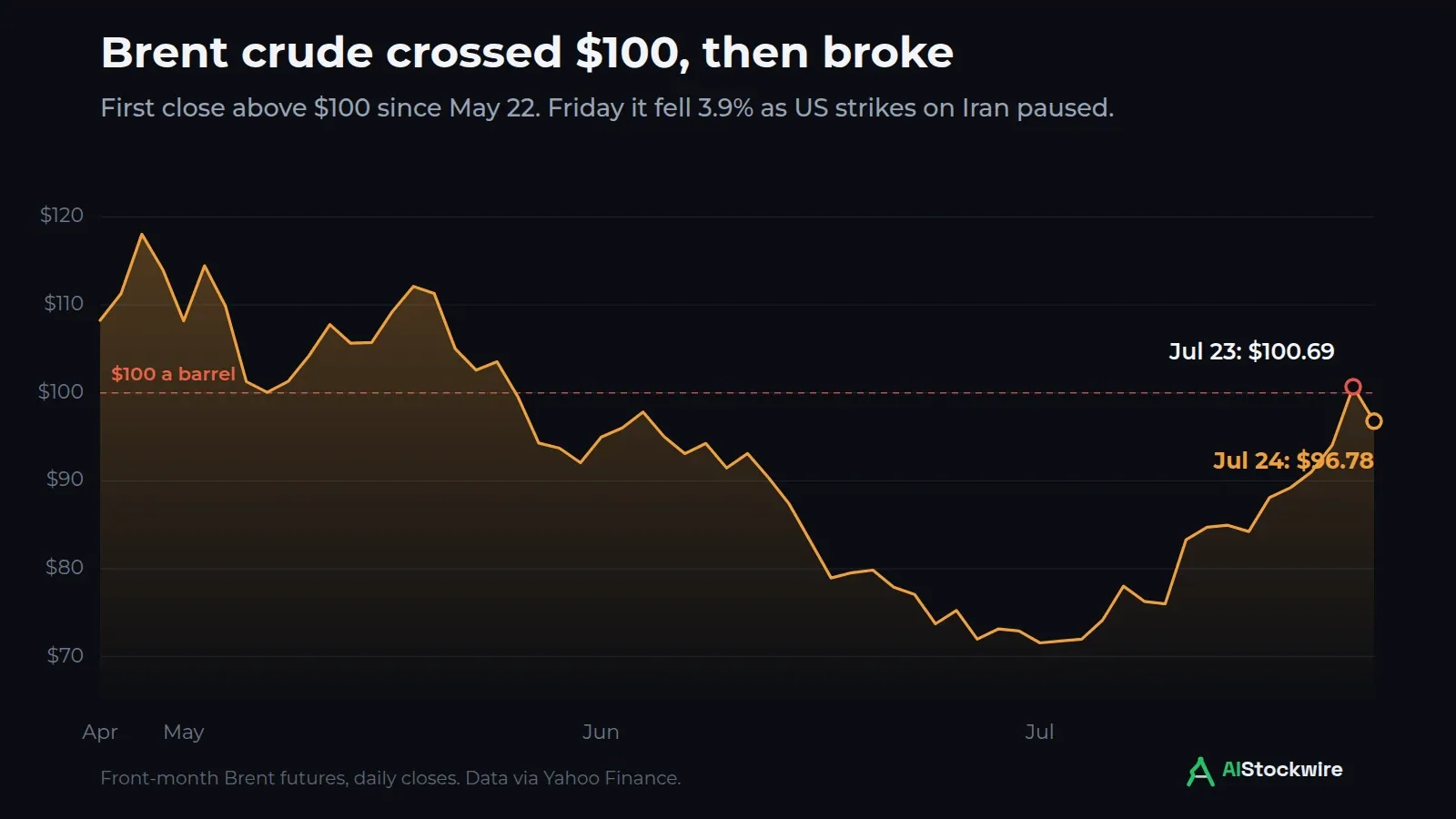
US strikes on Iran paused. Oil fell more than 3%, and Micron (MU) and Nebius (NBIS) rose over the weekend
US Central Command has gone two straight nights without striking Iran, and a Defense Department source told CNN operations are on a hold. Polymarket puts an effective ceasefire at 75% by August 31. US markets were shut all weekend, but the tokenized stock market never closed, and it spent Sunday buying the AI trade and selling oil.
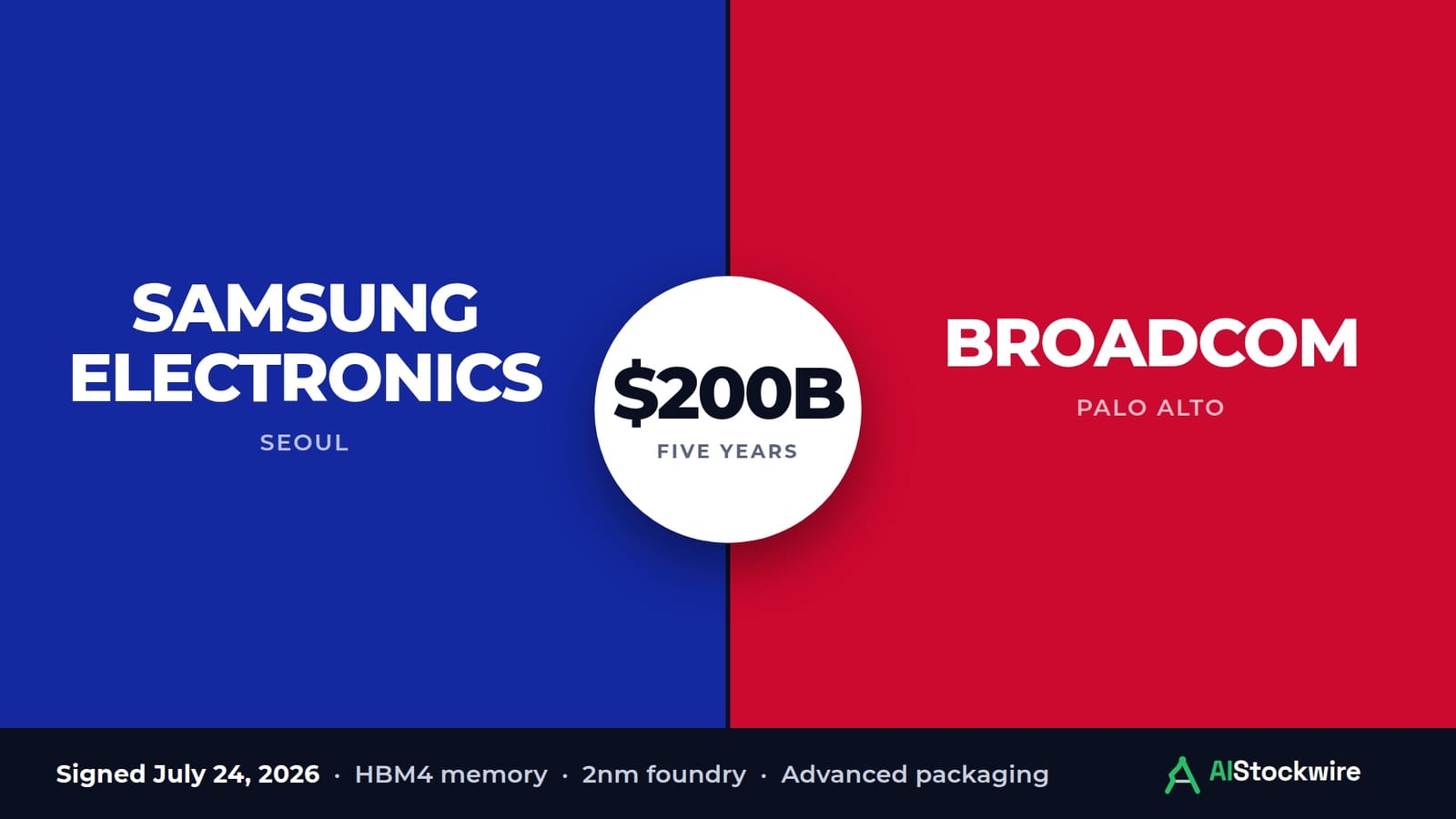
Samsung just signed a $200 billion deal with Broadcom (AVGO), a 32-year TSMC (TSM) customer.
Samsung Electronics signed a memorandum with Broadcom on July 24 covering more than $200 billion of work over five years, through 2030. Broadcom has had TSMC make its chips since 1994, and about 95% of the wafers it outsourced last year came from there. Samsung's foundry holds 6.5% of the world market against TSMC's 72%, and Seoul had closed for the week before any of it was announced.
The busiest stock on Hyperliquid isn't Nvidia. It's SK Hynix (SKHY), and it out-traded Ethereum
Real world assets did $25.1 billion on Hyperliquid in the week of July 13 to 19, out-trading crypto on the venue for the first time. The busiest contract is not Nvidia or Tesla. It is SK Hynix, which passed Ethereum for second place on the whole exchange, and whose Nasdaq listing (SKHY) fell 8.8% on Friday.
Nvidia (NVDA) and 34 other companies told Washington not to restrict open-weight AI. OpenAI signed a day late. Anthropic still hasn't.
The Open Weights and American AI Leadership letter asks Washington not to restrict AI models anyone can download. It went from 25 signatures to 35. OpenAI added its name after sitting out the launch, Google's CEO backed it without signing, and Anthropic declined to comment. Update, July 27: the list has since grown to 133 names, and both Google and Amazon signed.

Everyone's asking if AI is the next dot-com bubble. Nvidia and 25 companies just gave a clue.
Nvidia rallied 25 companies behind open AI models, and OpenAI and Anthropic sat it out. Here's why I think their coming IPOs, not this fight, mark the real top of the AI bubble.

Jensen Huang's first-ever post on X was an open-weights AI letter. Nvidia (NVDA) and Microsoft (MSFT) both signed it, along with 23 other companies.
Jensen Huang joined X in June and stayed silent for weeks. His first post was a joint industry letter on open AI models, signed by 25 companies including Microsoft. OpenAI, Anthropic, Google and Amazon did not sign.
All seven Magnificent Seven stocks fell today. Here's where that money actually went (July 23, 2026)
All seven Magnificent Seven stocks were red by late morning Thursday, led by Tesla's 14% drop on an earnings miss and Alphabet's close-to-7% slide despite beating estimates, on another capex raise. Amazon and Meta sold off too ahead of next week's reports. The money didn't just leave, it rotated: into defense on Lockheed's earnings beat, and out of quantum, SaaS and space.
I gave five AIs a pretend $10,000 to pick 5 tech stocks. Four bought Nvidia (NVDA). Claude went rogue.
ChatGPT, Gemini, Grok, Meta AI and Claude each picked five tech stocks to hold for six months. Four bought Nvidia. Claude went the other way. Every pick is here and the scoreboard runs monthly.
China's Xi Jinping just launched a 29-nation AI bloc. That's bullish for US AI stocks (NVDA, PLTR)
Xi Jinping used the 2026 World AI Conference in Shanghai to launch a 29-nation World AI Cooperation Organization and take a shot at US chip export controls. History says Washington answers moves like this with money, and that is bullish for the US AI trade.
Meta (META) is in talks to lease $10 billion of computing power to its rival Anthropic
The New York Times reports Meta is negotiating to lease AI rival Anthropic up to $10 billion in computing power, following the path SpaceX and TeraWulf already blazed.
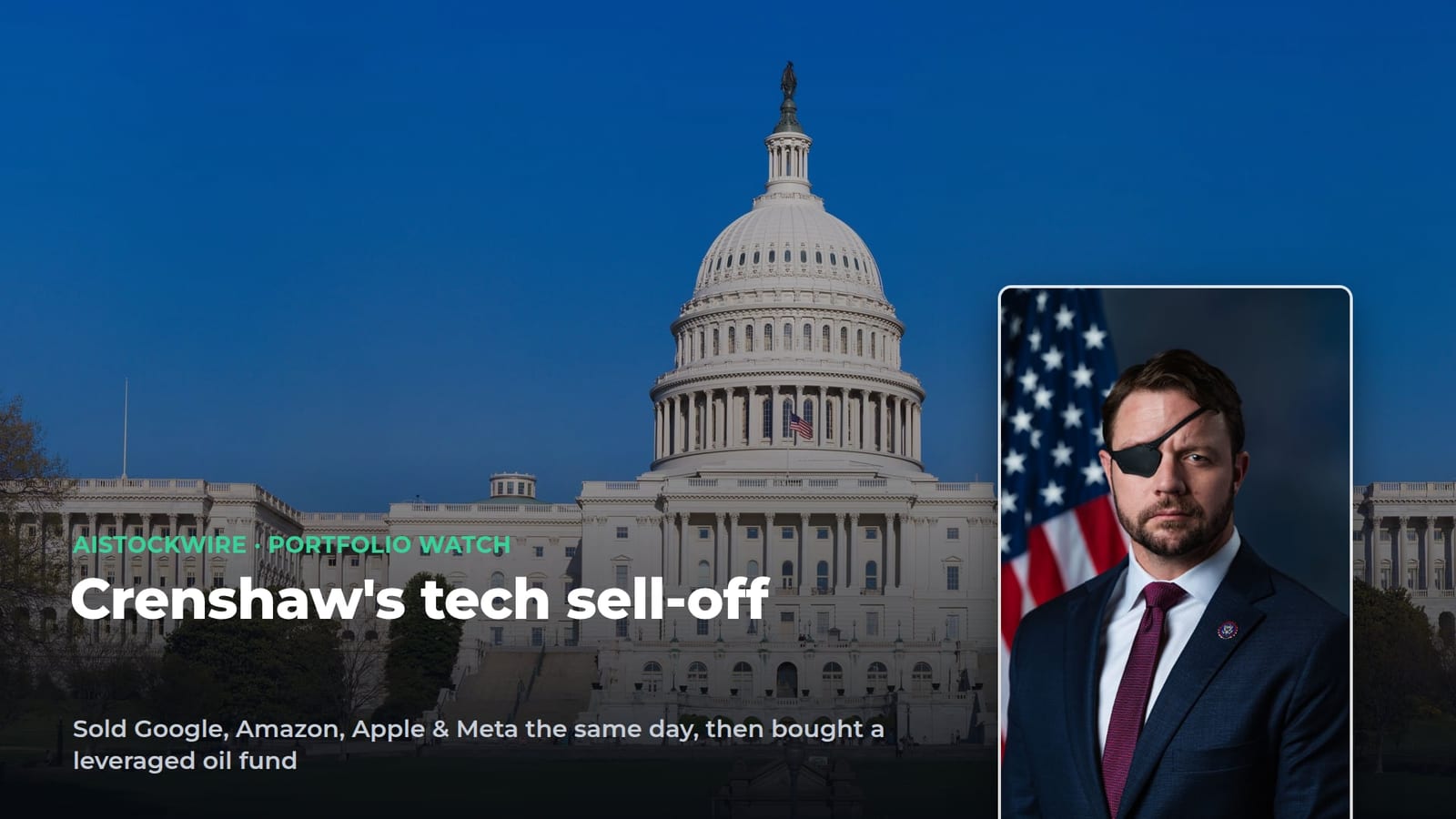
Dan Crenshaw sold Google, Amazon, Apple and Meta on the same day, then bought a leveraged oil fund
Rep. Dan Crenshaw's July 16 disclosure shows he sold Google, Amazon, Apple, Meta and a leveraged financial ETF all on the same day, then bought a leveraged oil fund instead. A separate trade in the same filing closed out a Meta options bet right after the stock's roughest day of the year.
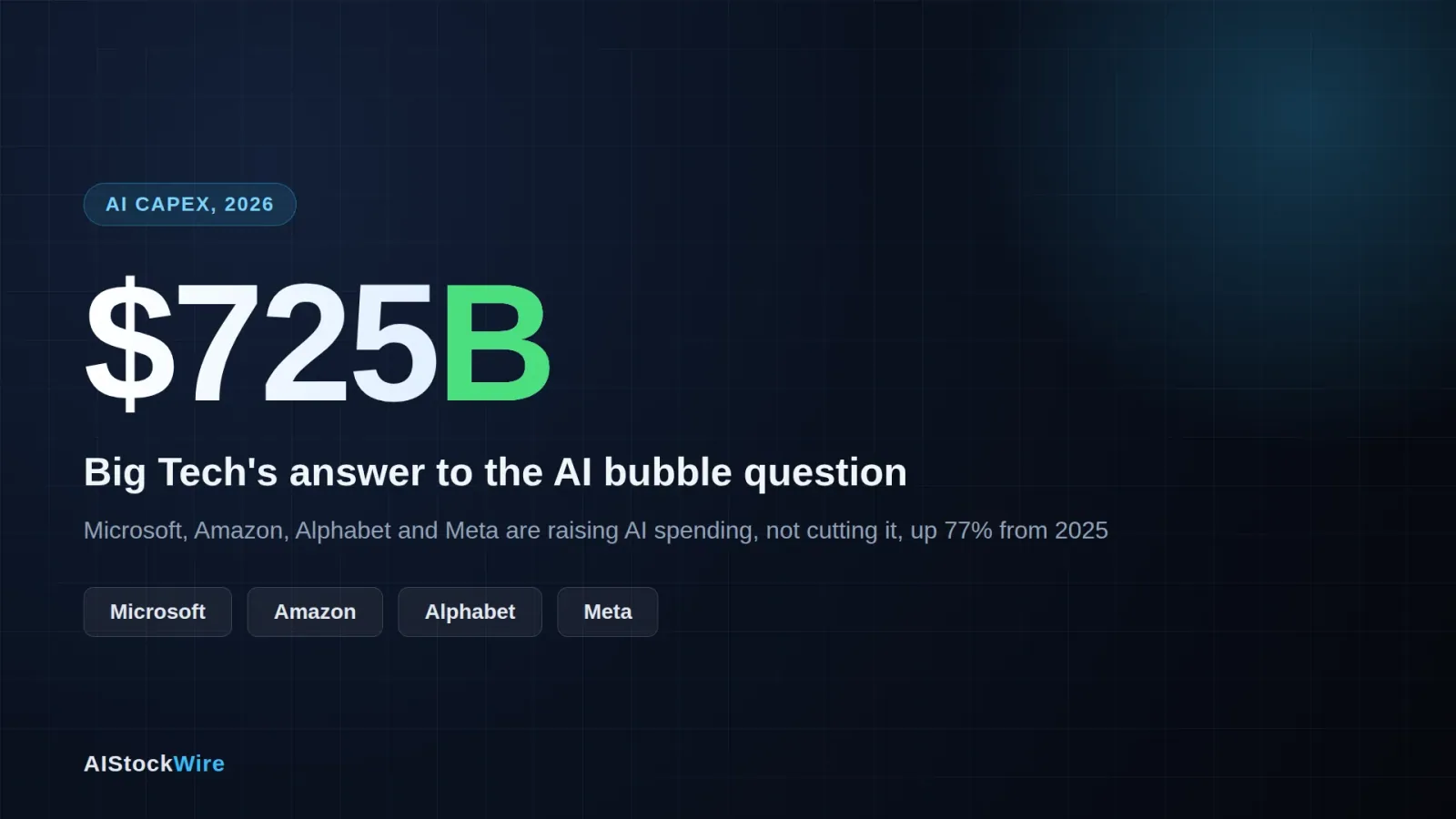
Big tech is about to spend $725 billion on AI data centers. That's not what a bubble looks like.
Microsoft, Amazon, Alphabet and Meta are guiding to roughly $725 billion in combined AI capex for 2026, up 77% from last year. States are moving to regulate the data centers that money builds, but the real risk to watch is that spending now outpaces free cash flow.
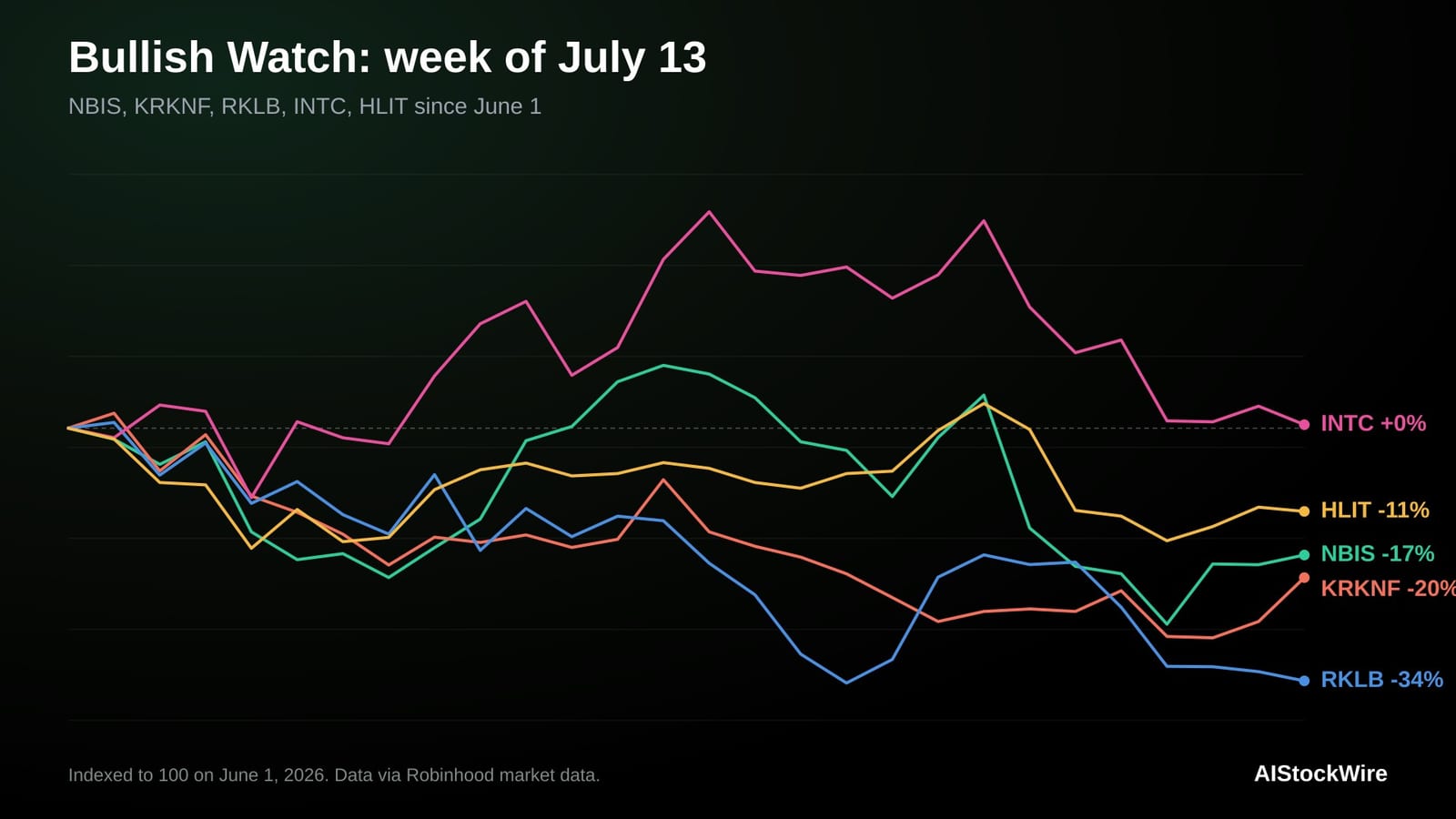
Bullish Watch, week of July 13: the market panicked over a Meta headline, and got it wrong
This week's watchlist, updated through Tuesday: Nebius gave back its early bounce on a data-center headline unrelated to its business, Kraken Robotics is holding up best of the five, Intel swung from a 6% drop to a 4.5% rally in two days, and Rocket Lab and Harmonic are still finding their footing.
Meta (META) jumps 4.7% on Muse Spark 1.1, Zuckerberg's return to X, and the Alberta data center
Meta Platforms (META) closed up about 4.7% on July 9, with the gains accelerating hardest in the final hour of trading. A new coding AI model, Mark Zuckerberg's first X post in three years, and last week's $9 billion Canada data center all fed the same move.
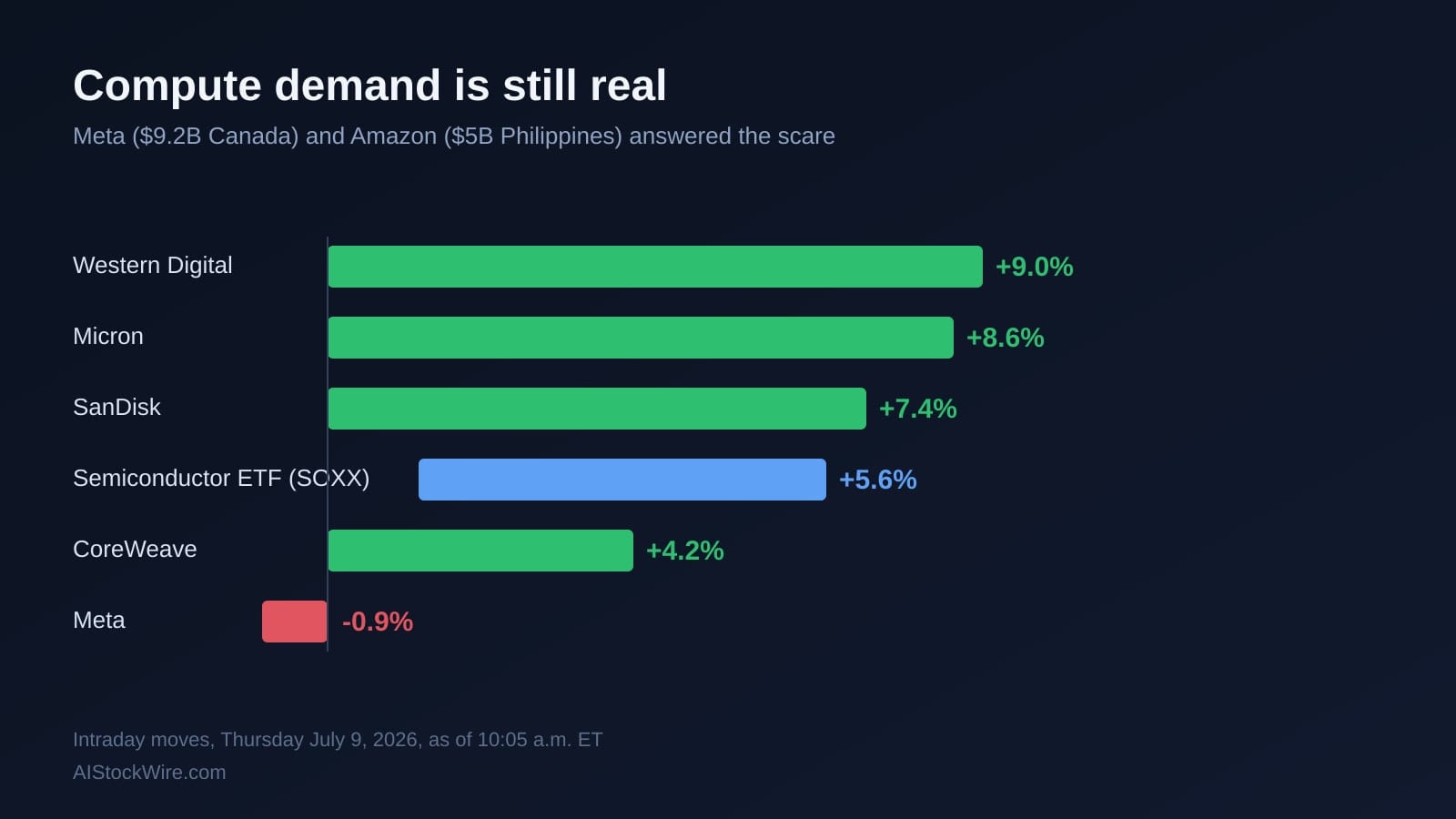
Chip stocks just had their best day in weeks. Meta and Amazon are both betting billions that AI compute demand isn't topping out (MU, WDC, META)
Micron, SanDisk, and Western Digital are having their best day in weeks. A week after a rumor said Meta had too much AI compute, Meta and Amazon both bet billions that demand is still growing, and Samsung's own record quarter couldn't shake investors until this week's data center news did.
Meta said it had spare compute. Then it broke ground on a $9 billion data center in Canada (META, CRWV, NBIS)
A week after Meta's excess-compute cloud plan crushed the neoclouds, it broke ground on a C$13 billion, 1-gigawatt data center in Alberta, Canada. The demand is real.