Key points
- Update: The Fed held at 3.50% to 3.75% on a 9-3 vote, with three dissents for a 25 bp hike.
- Traders put 38% odds on a Fed rate hike Wednesday. Nine days earlier the odds were 10.7%.
- Nine of 18 FOMC participants projected a 2026 hike back in June. One projected a cut.
- June CPI came in at 3.5% and core at 2.6%, both under forecast, before Brent went back over $100.
- Rate moves reach AI stocks through bond yields. Microsoft (MSFT) and Meta (META) report hours after the decision.
Update, July 29, 2:00 p.m. ET: The Federal Reserve held the target range at 3.50 percent to 3.75 percent, the outcome the odds favored. The vote was 9 to 3. Beth Hammack, Neel Kashkari and Lorie Logan each dissented in favor of a quarter point increase, so the hawkish camp the June projections pointed at turned up as three votes rather than none. The statement called inflation elevated relative to the 2 percent goal and closed with the line The Committee will deliver price stability. Kevin Warsh takes questions at 2:30 p.m. ET.
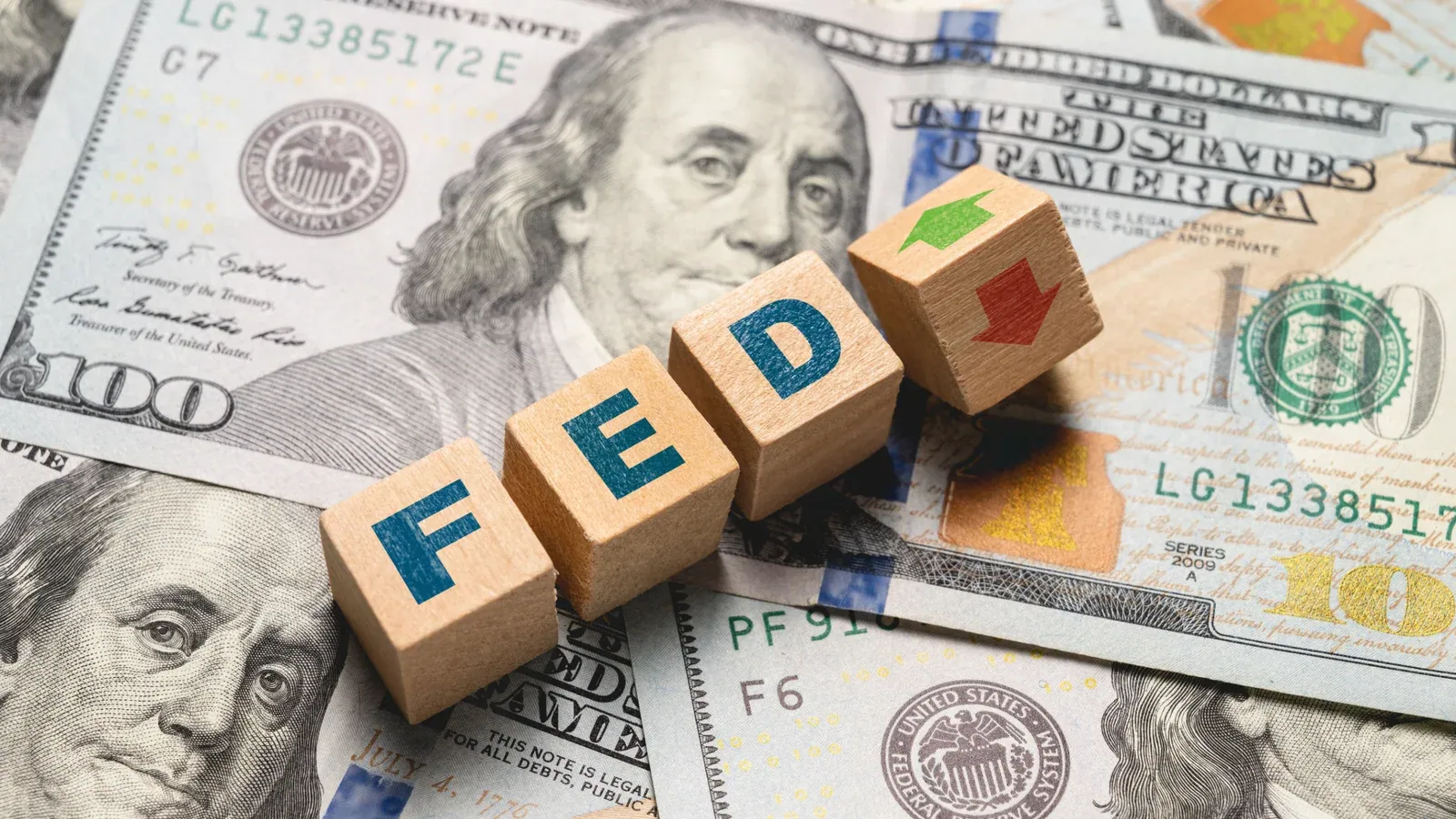
The Federal Reserve announces its rate decision Wednesday at 2 p.m. ET. Traders put the odds of an increase at 38 percent on July 24, according to CME Group's FedWatch tool. Nine days earlier those odds were 10.7 percent.
A hold is still the likelier outcome. The target range is 3.50 percent to 3.75 percent. Kevin Warsh, who took over as Fed chair this year, takes questions at 2:30 p.m. ET.
Nigel Green, chief executive of deVere Group, said the case for standing still has weakened. "The Fed will find holding steady a harder case to make than it looked even a few weeks ago," he said.
How the odds moved
| Date | Odds of a hike on July 29 |
|---|---|
| July 13 | 46.5% |
| July 15 | 10.7% |
| July 22 | 34.7% |
| July 24 | 38% |
CNBC reported the July 13 jump came as crude rose on the conflict between the US and Iran. June's inflation report landed on July 14, the day before the 10.7 percent reading. A separate reading on July 25 put the chance of a hold at 61.3 percent.
What changed at the June meeting
The Fed left rates alone on June 17 and dropped the easing bias from its statement. The projections carried the bigger news.
- Nine of the 18 participants penciled in at least one hike this year.
- Eight projected no change. One projected a cut.
- The median 2026 policy rate forecast rose to 3.8 percent, from 3.4 percent in March.
- Warsh abstained.
In March, every member had expected to be cutting or on hold.
Warsh has been blunt since taking the job. "Prices are too high," he said earlier this month. He's vowed to make inflation "a thing of the past," and said policymakers have "no tolerance for persistently elevated inflation."
The last inflation report went the other way
June's consumer price index landed on July 14, and it came in softer than economists expected. We covered it that day, when inflation fell for the first time since 2020.
| Measure | June 2026 |
|---|---|
| CPI, month over month | -0.4% |
| CPI, year over year | 3.5% |
| Core CPI, month over month | 0.0% |
| Core CPI, year over year | 2.6% |
| Energy index, month over month | -5.7% |
Economists had looked for core prices to rise 0.2 percent on the month and 2.9 percent on the year. It was the first pullback in the annual rate since January. The energy drop was the steepest since April 2020.
Oil turned back up
Most of June's decline came from energy. Oil has gone the other way since. Brent closed at $100.69 on July 23, its first close above $100 since May 22. It fell 3.9 percent to $96.78 the next day, and still finished the week up close to 10 percent from $88.10 on July 17. Supply through the Strait of Hormuz is still disrupted, and US strikes on Iran paused over the weekend.
Forecasters don't agree on where it goes from here. Rapidan Energy Group raised its fourth-quarter Brent estimate to near $100 from $85, citing the Hormuz disruptions. J.P. Morgan Global Research has Brent averaging $86 in the third quarter, $80 in the fourth and $78 at year end.
Economists disagree on the timing
Gregory Daco, chief economist at EY-Parthenon, doesn't expect a move this week. "While a July rate hike remains highly unlikely, the September FOMC meeting could become the first meaningful test," he said. He isn't firm on the rest of the year. "Our base case remains that the Fed will stay on hold through the rest of the year, but it's a 60-40 call," Daco said.
Futures pricing leans the same direction. Traders had the odds of a September hike near 56 percent as of July 22, and the odds of a hike at some point before 2027 at about 64 percent.
Bram Berkowitz, writing for the Motley Fool on July 25, argued the Fed won't raise at all this year. His argument is about what kind of inflation this is. "Rate hikes are less effective at solving supply-driven shocks," he wrote. He also pointed to recession risk, describing an economy that has shown resilience and "plenty of cracks."
Where a hike would land hardest
A move Wednesday would take the target range to 3.75 percent to 4.00 percent. That is one step of 25 basis points.
Rate decisions reach AI stocks through the bond market rather than through chip demand. Higher oil feeds inflation expectations, those push Treasury yields up, and higher yields weigh most on companies whose profits sit furthest out in time. AI infrastructure is the longest-duration trade in the market. CoinDesk reported that this same sequence, higher oil plus new tariff policy, pulled institutional money out of risk assets in the week to July 24. We covered the same link in the week-ahead piece.
The Kospi's 5.72 percent drop on July 24 was attributed to oil above $100 and rising odds of a Fed increase. Samsung Electronics fell 7.59 percent that session and SK Hynix fell 8.34 percent.
The decision lands in the middle of earnings week
Microsoft (MSFT) and Meta Platforms (META) report after Wednesday's close, a couple of hours after the Fed statement. Apple (AAPL) and Amazon (AMZN) follow on Thursday, alongside the advance reading on second-quarter GDP. Those four are about 17 percent of the S&P 500 by market value. Qualcomm (QCOM) reports the same week.
Alphabet (GOOGL) already raised its AI capital spending plan to $205 billion on July 22.
June core PCE, the inflation gauge the Fed targets, comes out Thursday, July 30. That's the day after the decision.
Sources
- CBS News, Will the Federal Reserve raise interest rates? Here is what experts predict for July's meeting
- CNBC, Consumer price index inflation report June 2026, July 14, 2026
- CNBC, A July rate hike from the Fed? The odds are rising, July 13, 2026
- Yahoo Finance, Warsh hawkish shock: 9 Fed officials signal 2026 rate hike
- Bloomberg, Brent oil forecast raised to $100 as Mideast disruptions persist, Rapidan says, July 24, 2026
- Motley Fool, Prediction: Kevin Warsh and the FOMC will not raise interest rates in 2026, July 25, 2026
Rate probabilities are CME Group FedWatch readings through July 25, 2026. Nothing here is investment advice.