CoreWeave (CRWV) secured priority SSD supply from SK Hynix's Solidigm in a multi-year deal, but key terms weren't disclosed.
CoreWeave announced a multi-year agreement with Solidigm for priority access to enterprise SSD capacity. The release carried no dollar value, no term length and no capacity figure, which is not how CoreWeave's $21 billion Meta agreement read. Enterprise SSD contract prices rose about 80% in the first quarter.
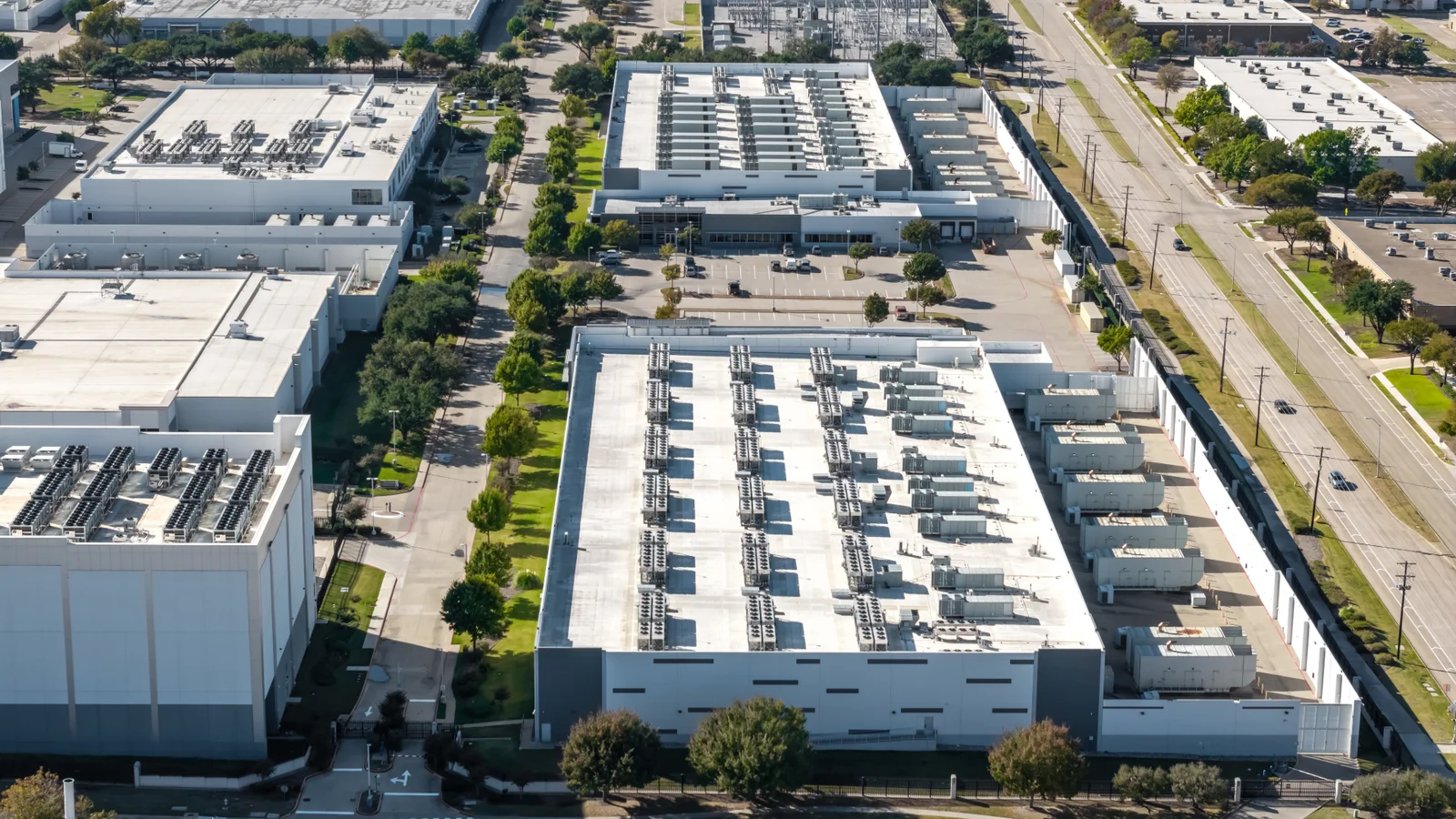
Anthropic is paying $10 billion over six years for compute at a Norway data center owned by bitcoin miner Bitdeer (BTDR). The startup reselling it was founded in January.
Anthropic will pay $10 billion over six years for capacity at a hydro-powered Norway campus, Bloomberg reported. Bitdeer signed a separate 16-year, $4.7 billion lease with the seven-month-old startup running the site.
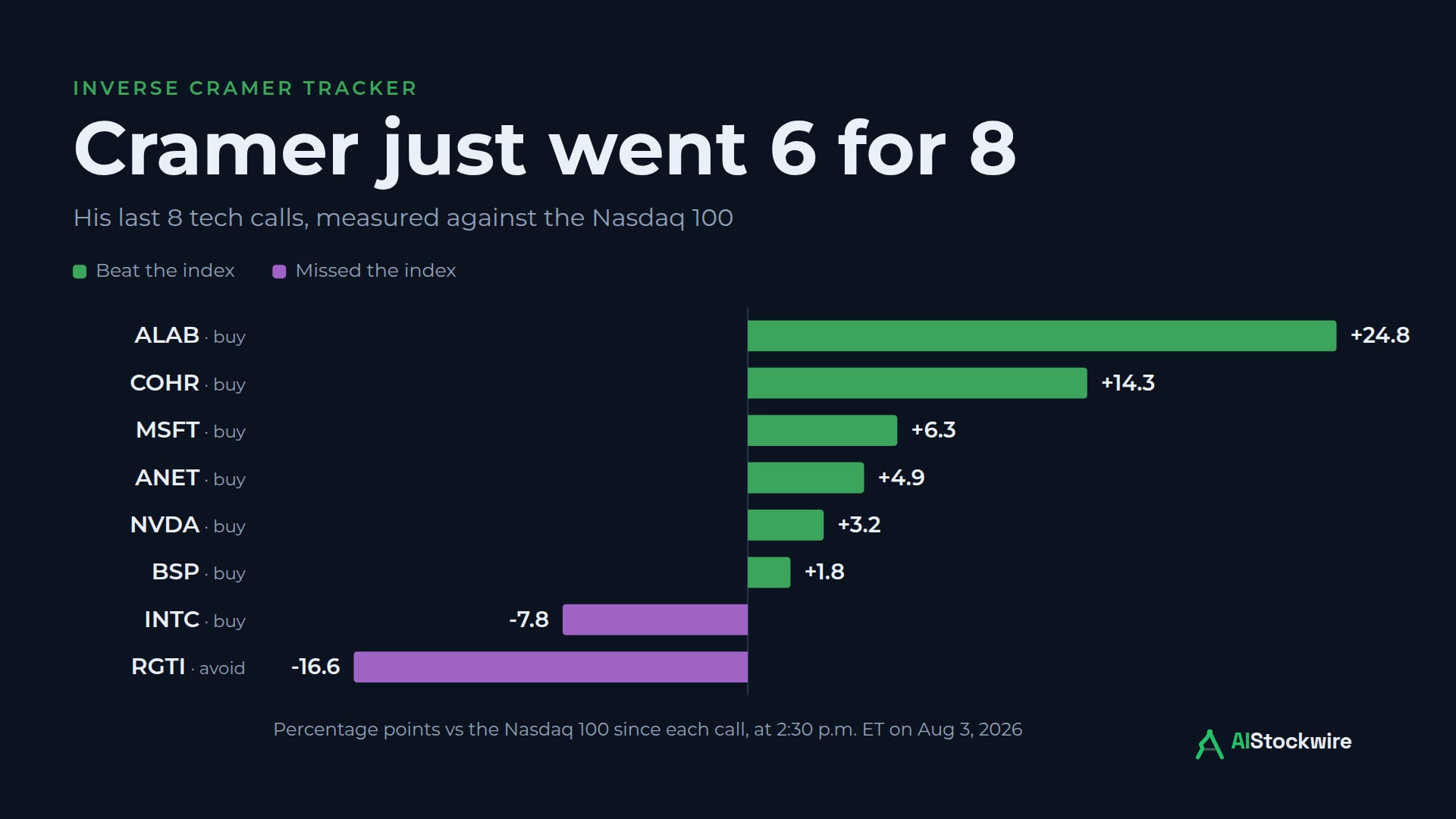
I run an Inverse Cramer tracker. Jim Cramer just went 6 for 8, led by Astera Labs' 30% rally.
I built a page to track how wrong Jim Cramer is, and I like the guy anyway. Six of his last eight tech calls beat the Nasdaq, and the one that didn't is the one holding my whole tracker up.
AMD gave Meta and OpenAI warrants on 320 million shares at a penny. They're now worth about $152 billion.
AMD issued Meta and OpenAI warrants on 160 million shares apiece at an exercise price of $0.01, vesting on 6 GW of Instinct shipments and a $600 share price. At Friday's close the pair is worth about $152 billion against $3.2 million to exercise. AMD's Q1 10-Q says none of it has vested or touched the financial statements yet.
The AI trade rallied Monday. Memory fell as much as 8% at the open even as chip prices kept rising.
Micron (MU) has lost a third of its value since June 25 and SanDisk nearly half. CoreWeave and Vertiv fell about half as far, and Nvidia rose. Memory contract prices never fell. What changed is the rate of increase, which went from 93-98% a quarter to a forecast 13-18%.
Alibaba (BABA) gave Kimi's maker 20,000 Nvidia (NVDA) chips. The White House says it trained on banned ones in Thailand.
Bloomberg reported Friday that Moonshot AI runs Kimi on about 20,000 Nvidia chips rented from Alibaba, its own 36% shareholder. Alibaba is cleared to buy 75,000 H200s and has taken almost none of them, so the contracted fleet is old stock. What K3 actually trained on is a separate question, and White House science director Michael Kratsios has already given his answer.
Citadel bought Leopold Aschenbrenner's stock book. Two outlets say he kept part of it, and a filing due Monday settles it.
Bloomberg and Reuters both name Ken Griffin's Citadel as the buyer of Situational Awareness's stock book, and both say bulk, not all. CNBC said the entire public book went in one block to one buyer. A Form 4 on the SharonAI (SHAZ) stake is due Aug. 3, an initial 13D or 13G from Citadel on Aug. 6, and the fund's own quarterly report on Aug. 14.
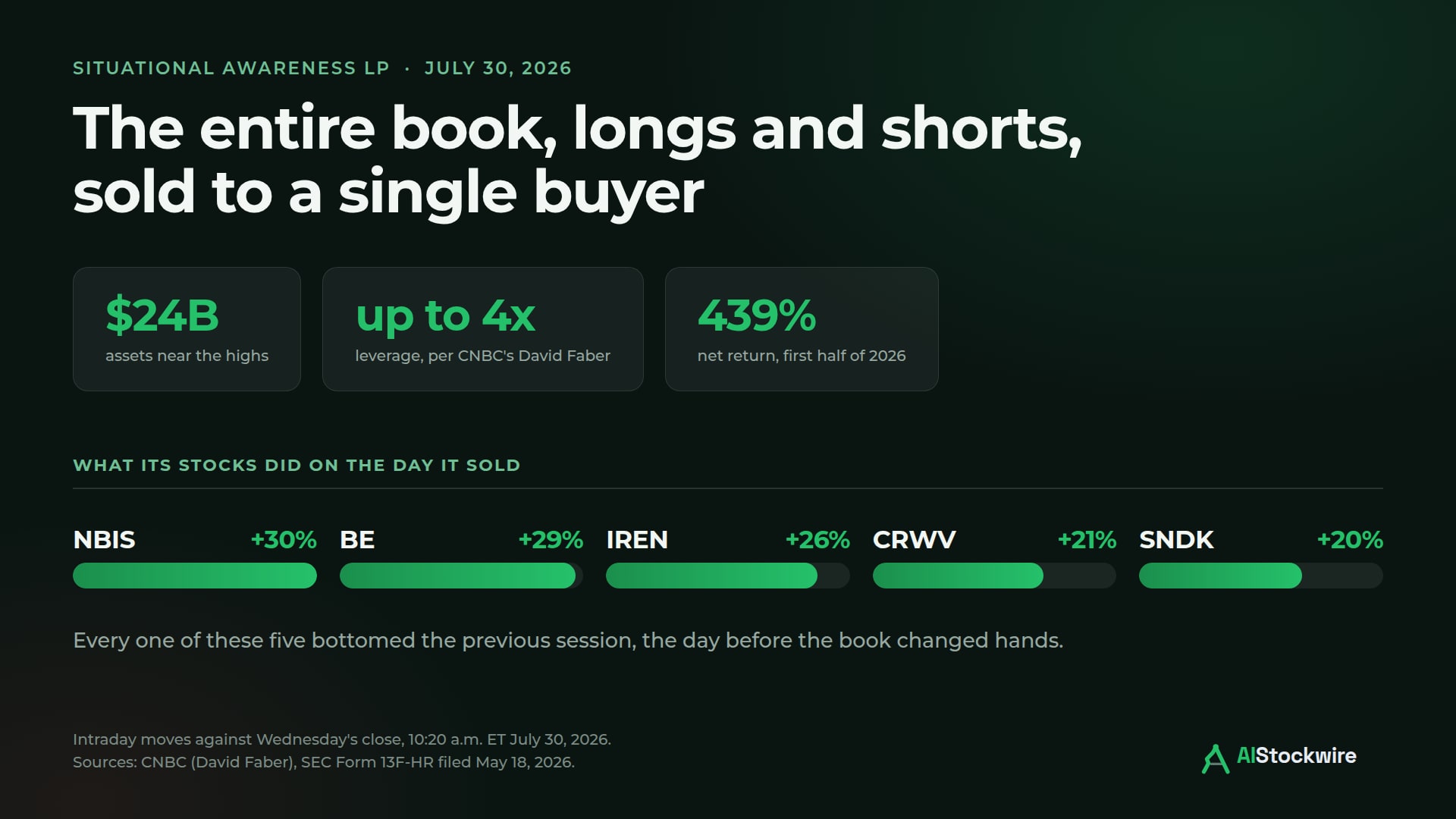
Leopold Aschenbrenner's AI fund sold its levered stock book, longs and shorts, to a single buyer. It was levered as much as four times.
CNBC's David Faber reported that Situational Awareness sold its entire public equities book, longs and shorts together, to a single buyer. The fund reached $24 billion near its highs and ran leverage of as much as four times. Its last public filing shows 62% of a $13.68 billion book was bets against chip stocks, and the stocks it owned outright fell twice as far.
Microsoft (MSFT) grew Azure 43% with $678 billion already booked. That is what Nvidia (NVDA) and Micron (MU) needed to hear.
Microsoft held its capital spending outlook near $190 billion, grew Azure 43% and rose 7.6% after hours. Meta raised its capex range by $10 billion at the low end, missed on earnings at $6.18 against a $7.14 estimate, and fell 9.0%. The market stopped scoring hyperscalers on capex announcements and started scoring them on whether the revenue arrives. That is a better setup for Nvidia, Broadcom and Taiwan Semiconductor than another spending headline, though it does nothing about the memory supply problem that actually caused July.

The Nasdaq is down six days straight. We checked what happened next all 85 times, so you don't have to.
The Nasdaq Composite closed lower for a sixth straight session on July 29, finishing at 24,442.94, down 5.4% over the run and 9.8% below its June record. It has happened 85 times since 1971. One month after those streaks the index gained a median 1.5%, which is exactly what a random month returns, and at three months it actually underperformed. The averages hide everything: every streak from 2000 to 2002 was followed by heavy losses, and every streak after 2009 by gains.
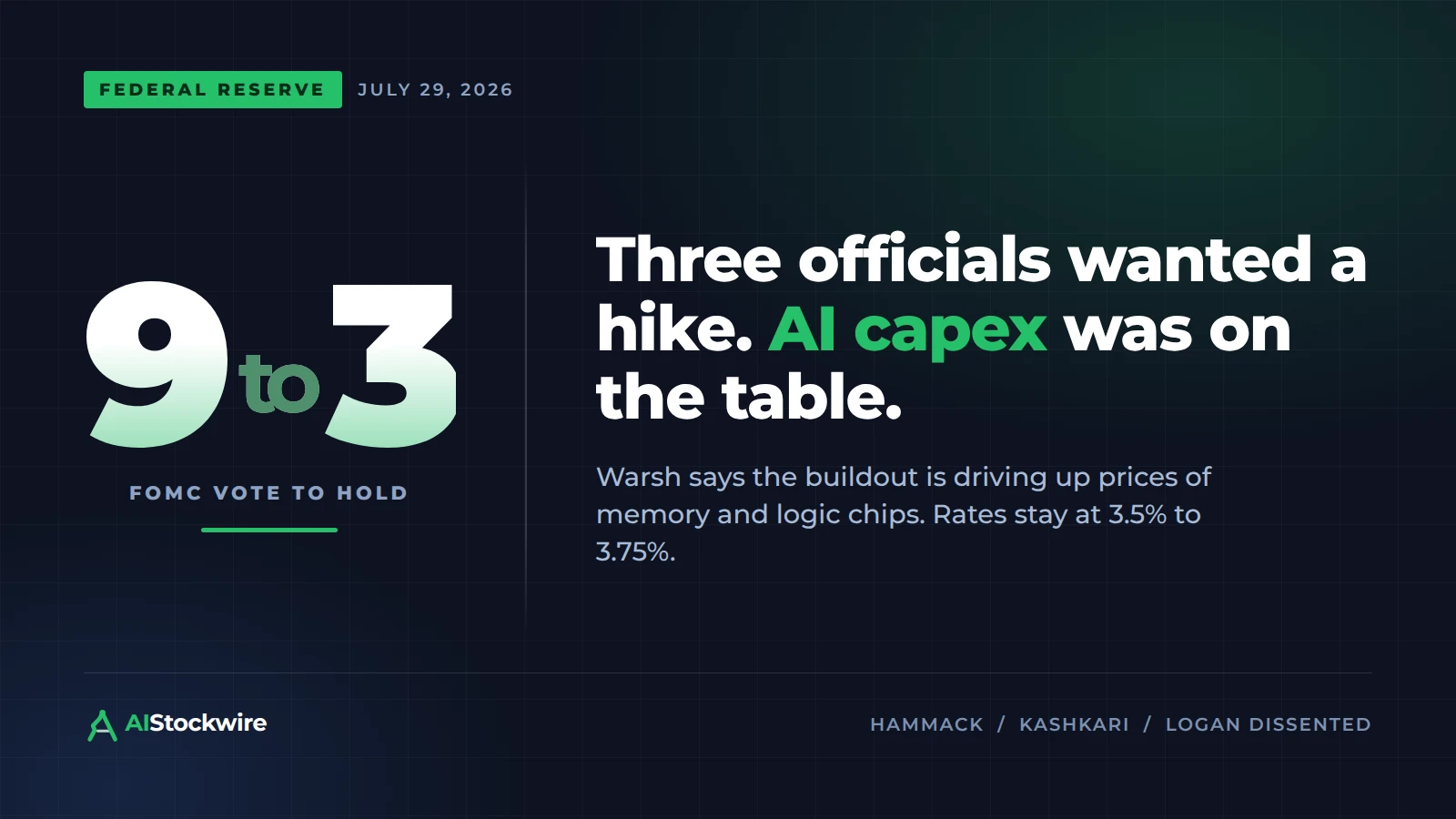
The Fed held rates 9 to 3. Warsh says the AI capex boom is driving up chip prices.
The Fed held the federal funds target range at 3.5% to 3.75% on July 29 in a 9 to 3 vote, with Beth Hammack, Neel Kashkari and Lorie Logan dissenting in favor of a quarter-point increase. Chairman Kevin Warsh listed the AI capex boom as one of four questions the committee debated and said it is driving up prices of memory and logic chips. The June minutes show many participants expect AI infrastructure demand to keep pressuring technology and electricity prices.
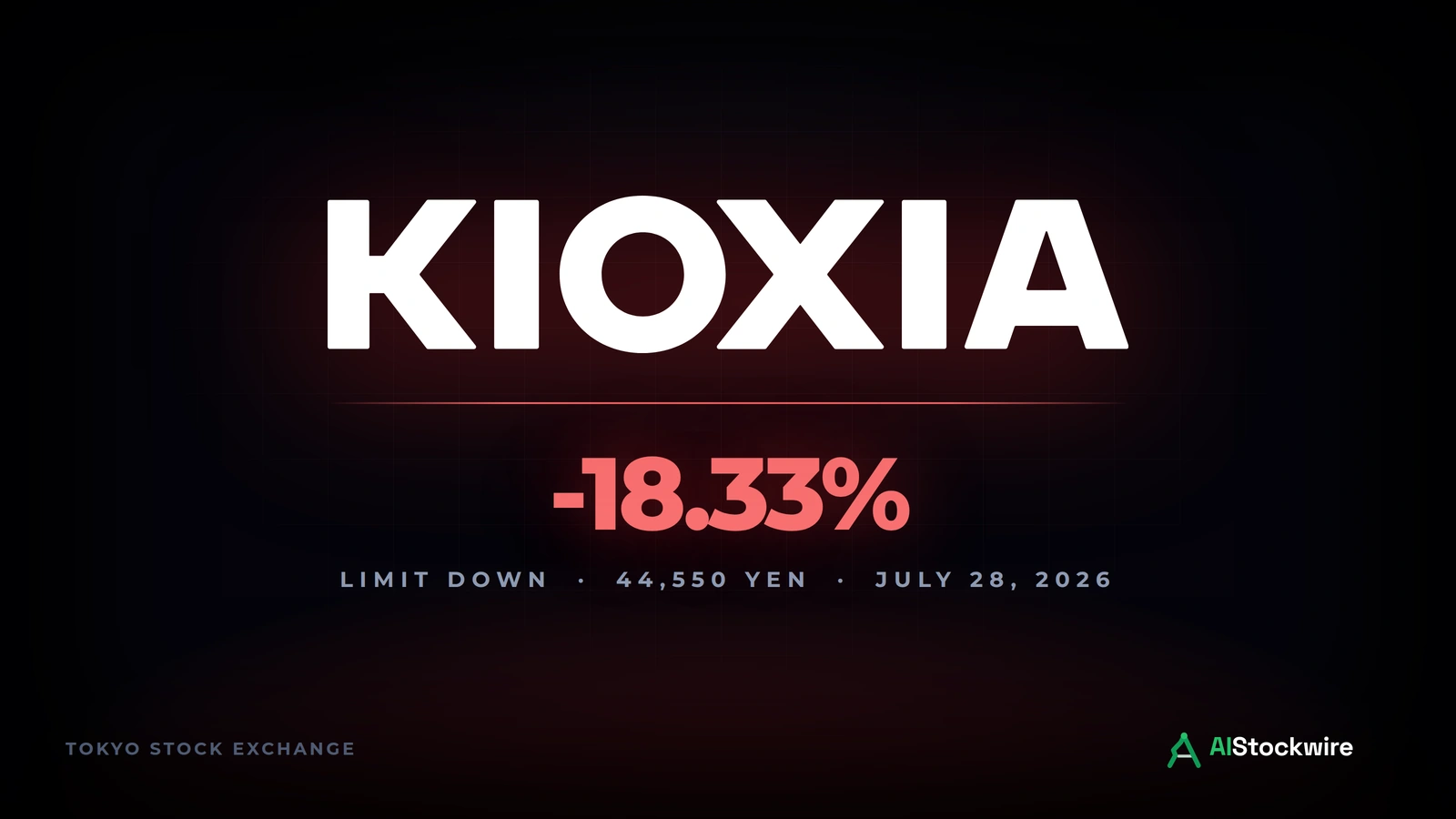
Kioxia hit limit-down again and is down 60% from its June peak. Sandisk (SNDK) co-owns its factories (July 28, 2026)
Kioxia closed at its limit-down price of 44,550 yen ($272 USD), down 18.33%, after finishing at the bottom of its daily band on July 17 as well. It is 60.5% below the 112,700 yen peak it set on June 22. It shares the Yokkaichi and Kitakami NAND plants with Sandisk (SNDK), which is why the two keep falling together.
Citadel says the Fed hikes Wednesday. All 104 economists Reuters asked say it won't (MU, NVDA, July 28, 2026)
I was sure Citadel's rate call knocked the Nasdaq down 2% Tuesday morning. Nvidia (NVDA) was green while Micron (MU) fell 7.69% and the 2-year yield never moved, so it was not the Fed at all. It was Seoul. Here is the split that actually matters at 2 p.m. Wednesday.

Michael Burry posted three charts making the AI bear case. Two of them show the selling already happened.
Burry shared three Bloomberg charts on the AI trade. One maps the circular deals around Nvidia (NVDA). The other two show big tech forward multiples back at or below their 10-year averages, with Apple (AAPL) the lone expensive name and the only megacap missing from the circular map.
Korea's Kospi fell 10.84% and halted trading. Nvidia (NVDA) is flat and Micron (MU) is down 10% (July 28, 2026)
Korea's Kospi closed at 6,023.66 on Tuesday, down 10.84%, its fourth largest one-day fall on record, after Korea Exchange stopped all trading for 20 minutes. Samsung and SK Hynix each lost more than 13%. The US carryover went into memory and storage, with Sandisk (SNDK) down 14.52% and Micron (MU) down 9.54%, while Nvidia (NVDA) held flat and the Dow rose.

Anthropic says it never asked to ban open-weight AI. Dario Amodei does want China cut off from Nvidia (NVDA) chips.
Dario Amodei answered the Nvidia-hosted open-weights letter on July 27, three days after Anthropic became the only major AI lab to skip it. He says a ban was never the ask. What he does want is China cut off from US chips, a crackdown on industrial-scale distillation, and mandatory safety testing for every capable model, open or closed.
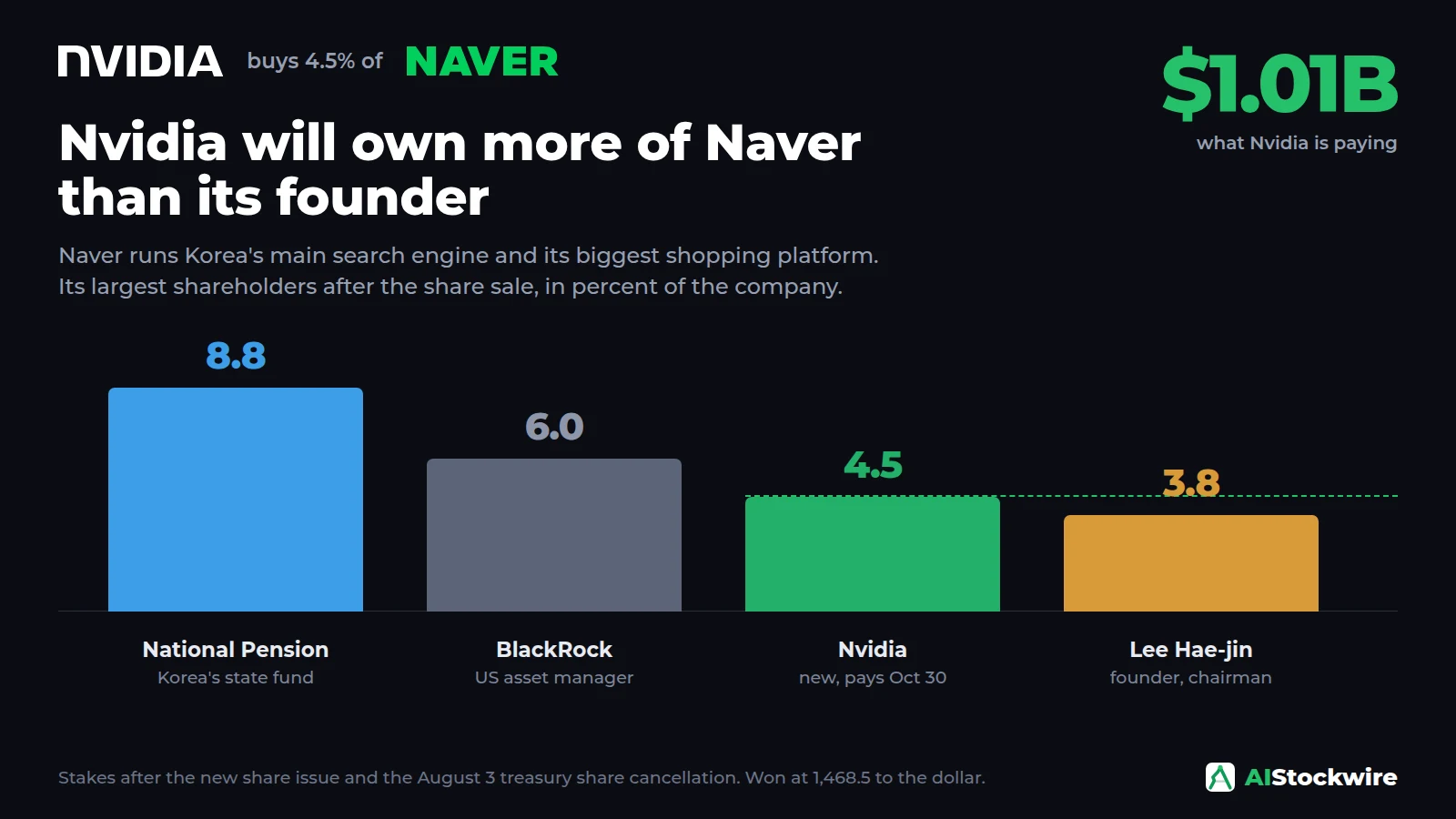
Nvidia (NVDA) will own more of Korean internet company Naver than its founder does
Naver, the Korean company that runs the country's main search engine and its biggest shopping platform, told the Korea Exchange on Monday it will sell 1.4809 trillion won of new shares to Nvidia, near $1.01 billion. That makes Nvidia the third largest shareholder at about 4.5%, ahead of founder Lee Hae-jin at 3.8%.
Michael Burry's picks: the Micron (MU) bet is up 17%. He has been averaging down on Lululemon (LULU) since 2025.
Burry deregistered Scion, so the 13F trail stopped and his trades now surface first on a newsletter with 300,000 subscribers. Here is everything he has disclosed since June, priced as of July 27. The point of laying them out together is that he is not always right.
Nasdaq futures were up over 1% and things looked good. Then chips tanked and took the whole gain with them, led by ASML, Micron (MU) and Nvidia (NVDA) (July 27, 2026)
Futures pointed to a strong open on the Iran ceasefire and a 6.79% drop in oil. QQQ opened up 1.09% and was negative within the hour. Three chip headlines did it, and two of them came out of China: a domestic DUV lithography report that hit ASML, and CXMT's Shanghai debut that hit Micron.
ChangXin Memory (CXMT) closed up 466% on day one and is worth as much as Intel. Its factories are sold out through 2027.
ChangXin Memory (CXMT) closed its Shanghai debut up 465.82%, passing ICBC as China's most valuable listed company and drawing level with Intel. Only 6.73% of its stock was tradable. The order book behind it is the part that matters for Micron (MU) and SK Hynix (SKHY).
Nvidia (NVDA) is in talks to guarantee $250 billion of OpenAI's data center financing. The chips are another $350 billion.
The Wall Street Journal reported Sunday evening that Nvidia is in talks to guarantee about $250 billion of OpenAI's financing for a 10 gigawatt campus in southern Ohio. The guarantee would cover lease and construction costs, not chips, which are a separate arrangement worth about $350 billion. Nvidia's earlier plan to invest up to $100 billion in OpenAI was never completed.
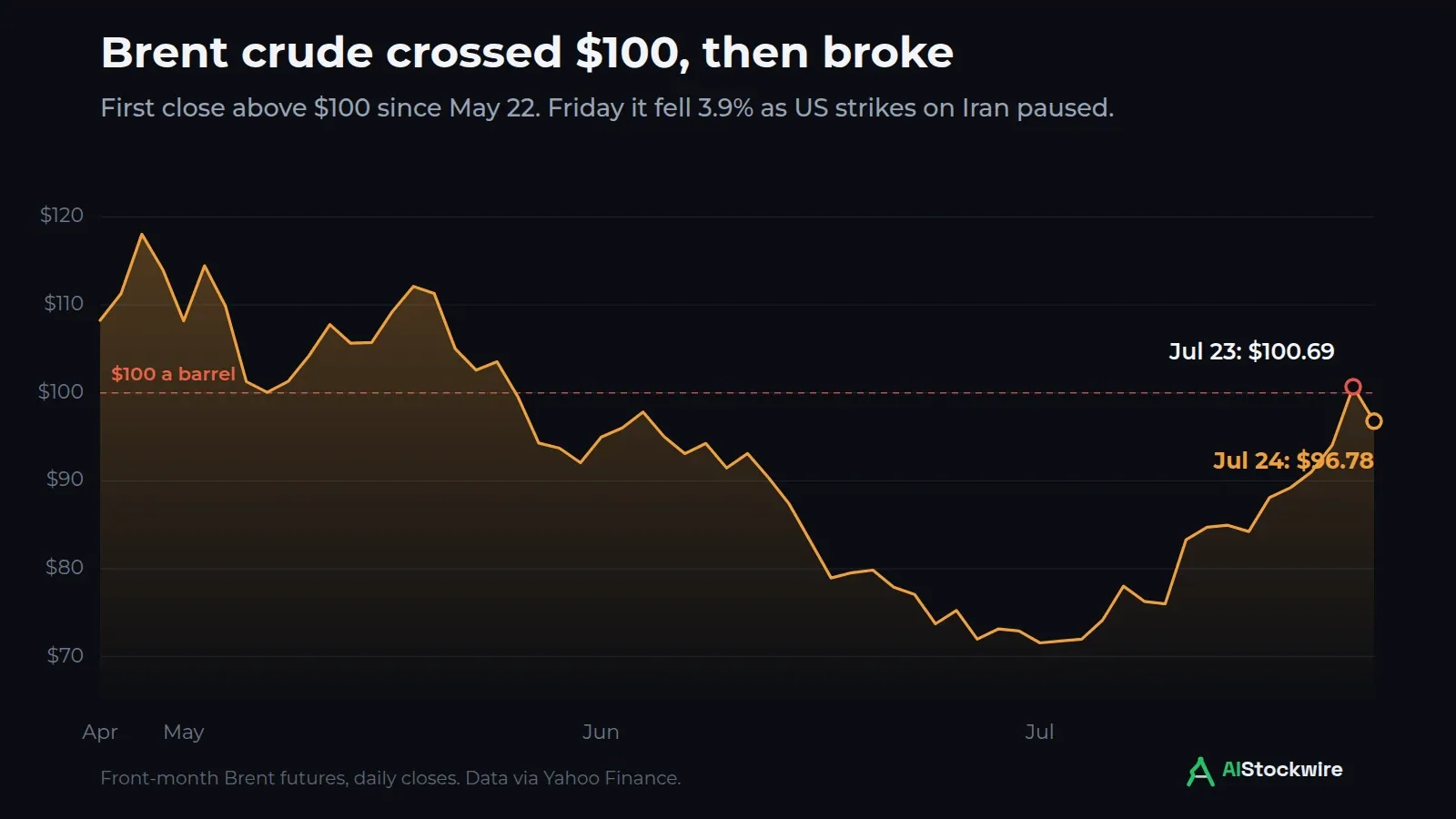
US strikes on Iran paused. Oil fell more than 3%, and Micron (MU) and Nebius (NBIS) rose over the weekend
US Central Command has gone two straight nights without striking Iran, and a Defense Department source told CNN operations are on a hold. Polymarket puts an effective ceasefire at 75% by August 31. US markets were shut all weekend, but the tokenized stock market never closed, and it spent Sunday buying the AI trade and selling oil.
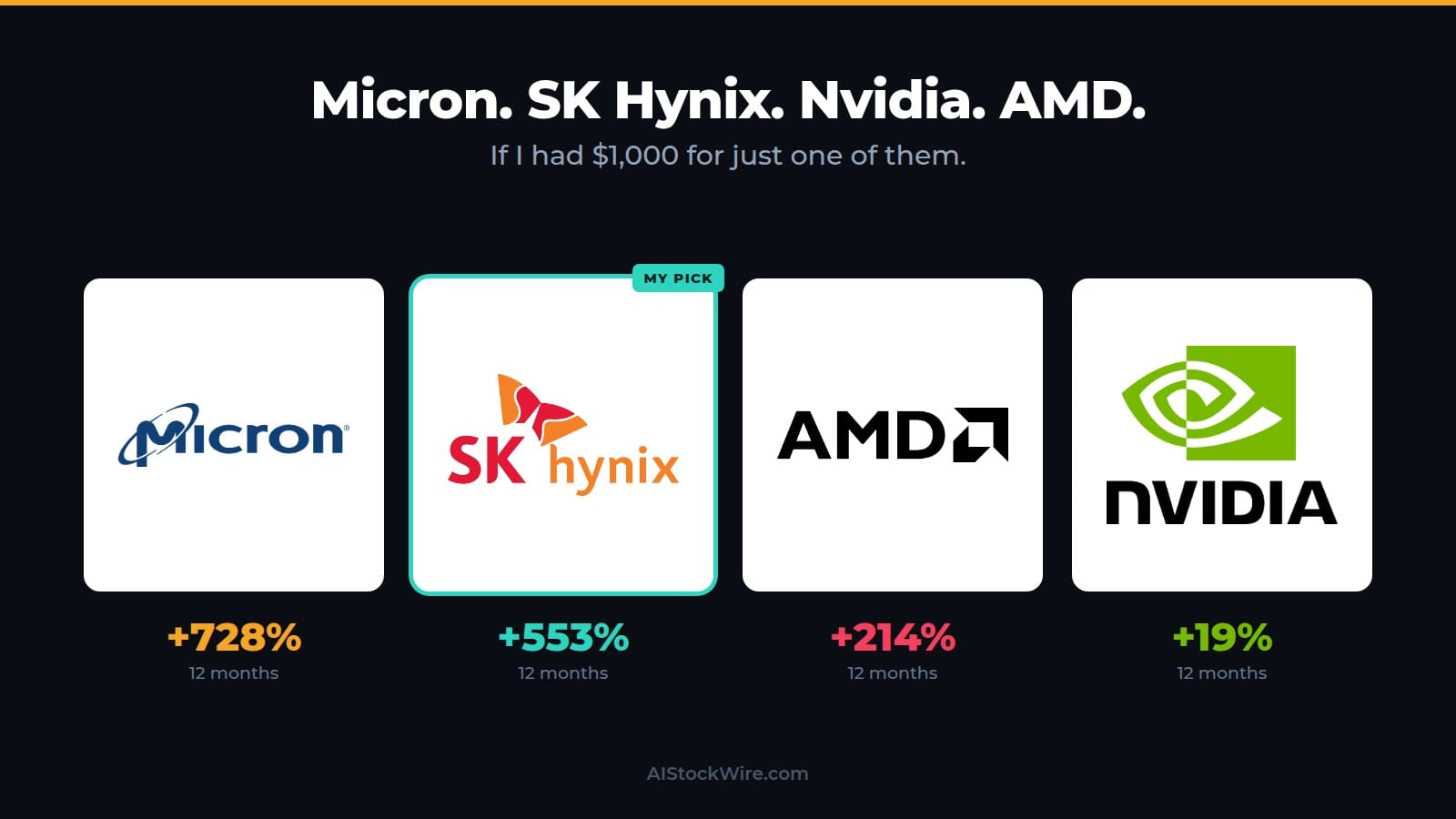
If I had $1,000 for one AI chip stock, I'd buy SK Hynix (SKHY) over Nvidia (NVDA), Micron (MU) and AMD
Nvidia and SK Group signed a $500 billion AI infrastructure deal late Friday night, after both New York and Seoul had closed for the week. Given $1,000 for one of the four AI chip stocks, I'd put it in SK Hynix, which trades at 5.6 times forward earnings even after its 28% ADR premium against 6.4 for Micron.
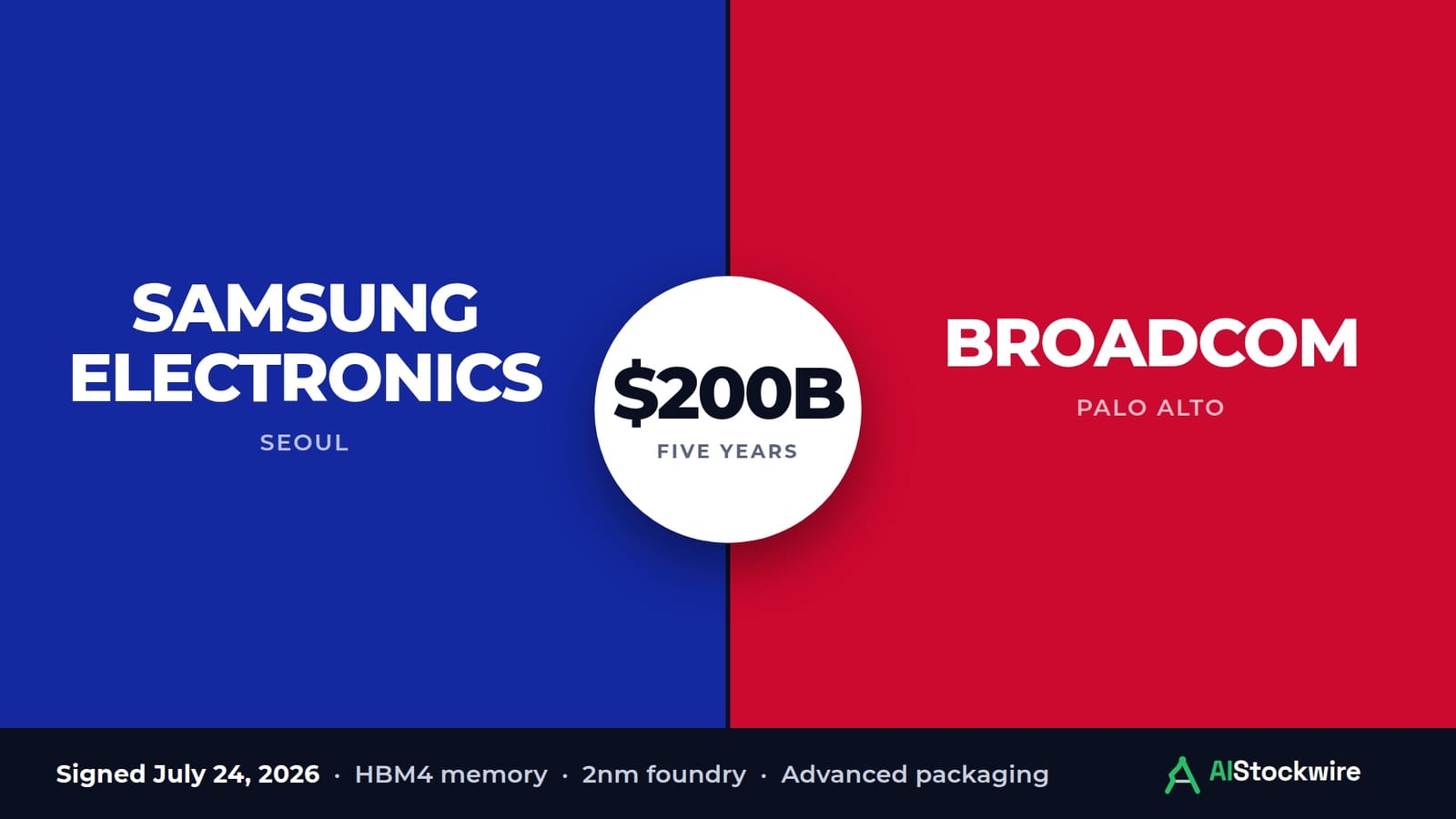
Samsung just signed a $200 billion deal with Broadcom (AVGO), a 32-year TSMC (TSM) customer.
Samsung Electronics signed a memorandum with Broadcom on July 24 covering more than $200 billion of work over five years, through 2030. Broadcom has had TSMC make its chips since 1994, and about 95% of the wafers it outsourced last year came from there. Samsung's foundry holds 6.5% of the world market against TSMC's 72%, and Seoul had closed for the week before any of it was announced.