About $25 billion of Microsoft's (MSFT) AI budget is memory getting more expensive. Wednesday says whether that grew.
Microsoft told investors in April it would spend about $190 billion on capital projects this year. Around $25 billion of that increase bought nothing new, it was the same buildout at a higher price after memory costs rose. Microsoft reports Wednesday after the close, two hours after the Fed decision.
Nasdaq futures were up over 1% and things looked good. Then chips tanked and took the whole gain with them, led by ASML, Micron (MU) and Nvidia (NVDA) (July 27, 2026)
Futures pointed to a strong open on the Iran ceasefire and a 6.79% drop in oil. QQQ opened up 1.09% and was negative within the hour. Three chip headlines did it, and two of them came out of China: a domestic DUV lithography report that hit ASML, and CXMT's Shanghai debut that hit Micron.
Nvidia (NVDA) is in talks to guarantee $250 billion of OpenAI's data center financing. The chips are another $350 billion.
The Wall Street Journal reported Sunday evening that Nvidia is in talks to guarantee about $250 billion of OpenAI's financing for a 10 gigawatt campus in southern Ohio. The guarantee would cover lease and construction costs, not chips, which are a separate arrangement worth about $350 billion. Nvidia's earlier plan to invest up to $100 billion in OpenAI was never completed.
Fed rate hike odds went from 10.7% to 38% in nine days. AI stocks are the most exposed.
Odds of an increase at Wednesday's meeting stood at 38% on July 24, against 10.7% on July 15. Nine of 18 FOMC participants projected a hike this year back in June, and Chair Kevin Warsh says policymakers have no tolerance for elevated inflation. June CPI came in cooler than forecast, but oil has since gone back over $100, and the AI trade is the part of the market most exposed to what happens next.
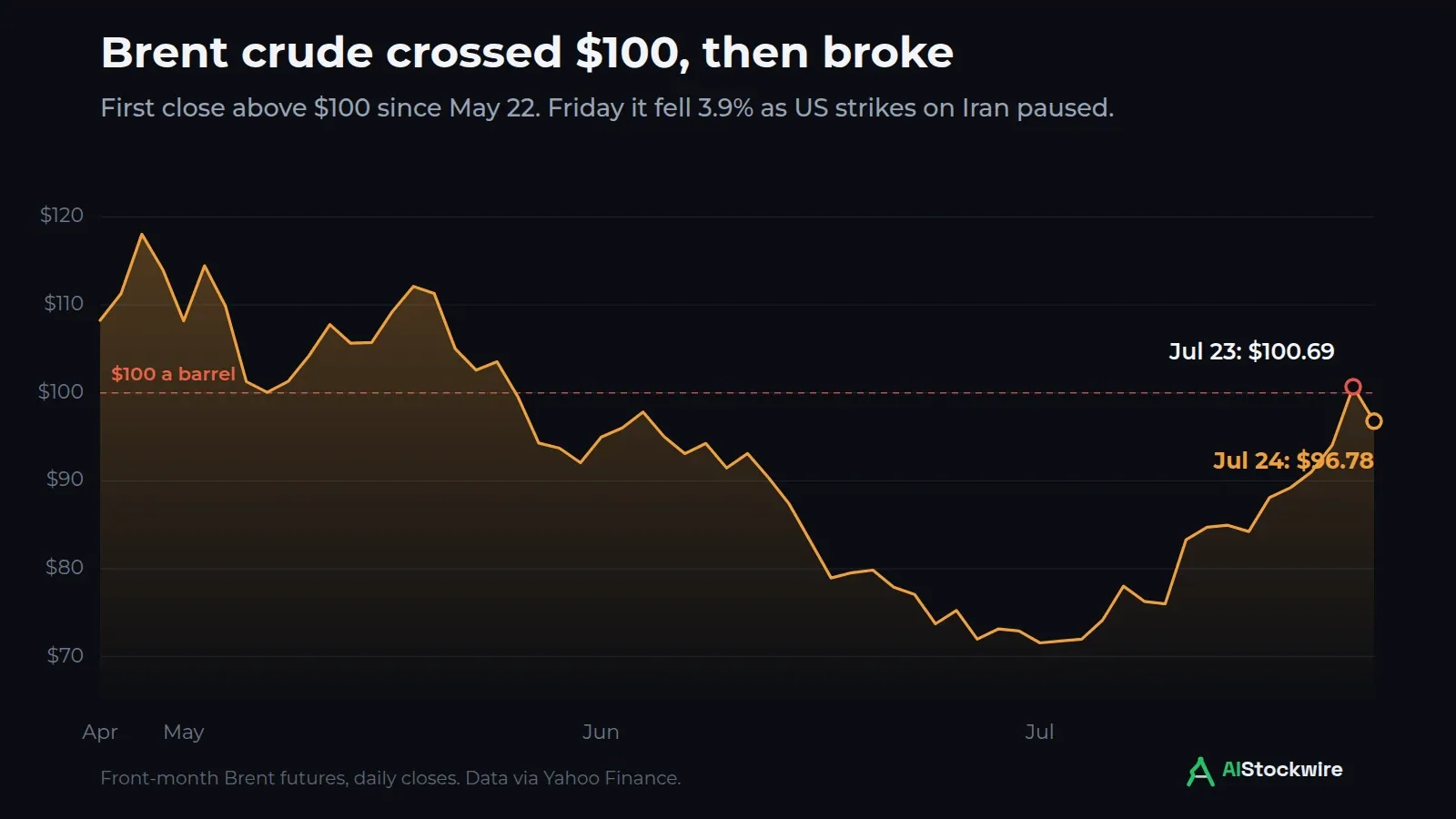
US strikes on Iran paused. Oil fell more than 3%, and Micron (MU) and Nebius (NBIS) rose over the weekend
US Central Command has gone two straight nights without striking Iran, and a Defense Department source told CNN operations are on a hold. Polymarket puts an effective ceasefire at 75% by August 31. US markets were shut all weekend, but the tokenized stock market never closed, and it spent Sunday buying the AI trade and selling oil.
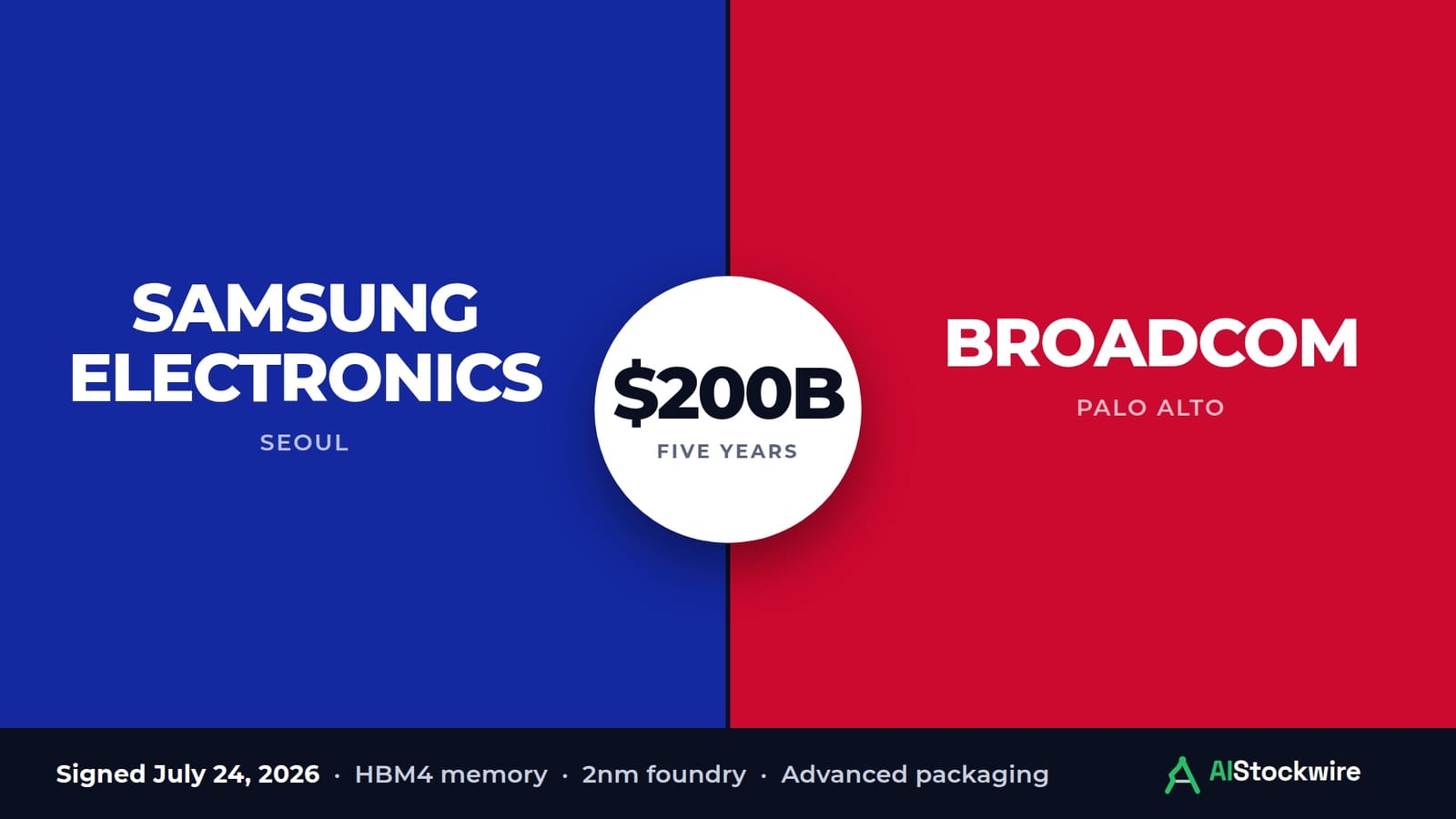
Samsung just signed a $200 billion deal with Broadcom (AVGO), a 32-year TSMC (TSM) customer.
Samsung Electronics signed a memorandum with Broadcom on July 24 covering more than $200 billion of work over five years, through 2030. Broadcom has had TSMC make its chips since 1994, and about 95% of the wafers it outsourced last year came from there. Samsung's foundry holds 6.5% of the world market against TSMC's 72%, and Seoul had closed for the week before any of it was announced.
The busiest stock on Hyperliquid isn't Nvidia. It's SK Hynix (SKHY), and it out-traded Ethereum
Real world assets did $25.1 billion on Hyperliquid in the week of July 13 to 19, out-trading crypto on the venue for the first time. The busiest contract is not Nvidia or Tesla. It is SK Hynix, which passed Ethereum for second place on the whole exchange, and whose Nasdaq listing (SKHY) fell 8.8% on Friday.
Nvidia (NVDA) and 34 other companies told Washington not to restrict open-weight AI. OpenAI signed a day late. Anthropic still hasn't.
The Open Weights and American AI Leadership letter asks Washington not to restrict AI models anyone can download. It went from 25 signatures to 35. OpenAI added its name after sitting out the launch, Google's CEO backed it without signing, and Anthropic declined to comment. Update, July 27: the list has since grown to 133 names, and both Google and Amazon signed.

Everyone's asking if AI is the next dot-com bubble. Nvidia and 25 companies just gave a clue.
Nvidia rallied 25 companies behind open AI models, and OpenAI and Anthropic sat it out. Here's why I think their coming IPOs, not this fight, mark the real top of the AI bubble.
Jensen Huang's first-ever post on X was an open-weights AI letter. Nvidia (NVDA) and Microsoft (MSFT) both signed it, along with 23 other companies.
Jensen Huang joined X in June and stayed silent for weeks. His first post was a joint industry letter on open AI models, signed by 25 companies including Microsoft. OpenAI, Anthropic, Google and Amazon did not sign.
All seven Magnificent Seven stocks fell today. Here's where that money actually went (July 23, 2026)
All seven Magnificent Seven stocks were red by late morning Thursday, led by Tesla's 14% drop on an earnings miss and Alphabet's close-to-7% slide despite beating estimates, on another capex raise. Amazon and Meta sold off too ahead of next week's reports. The money didn't just leave, it rotated: into defense on Lockheed's earnings beat, and out of quantum, SaaS and space.

Jim Cramer says Chinese AI models are run by the PLA and US companies must stop using them. Microsoft is already testing one.
Jim Cramer posted a four-part warning on X that US companies must stop using Chinese AI models, calling the companies PLA-run. The claim lands a day after Microsoft was reported testing Kimi K3, and Moonshot AI's actual ownership is more complicated than he suggests.
IREN signed $2.8 billion in AI contracts, and bitcoin miner stocks rallied with it
IREN closed up 19.6% after announcing $2.8 billion in new AI cloud contracts. Hut 8 and CleanSpark had data center lease news of their own, while CIFR, SLNH and KEEL rallied in sympathy. The fuel: Moonshot AI is turning away paying Kimi K3 subscribers because it ran out of GPU capacity.
Microsoft (MSFT) is testing Moonshot's Kimi K3 for Copilot to cut its Azure AI bill by $600 million
Microsoft is testing Moonshot's Kimi K3 for Azure and Copilot, hoping to cut AI costs by $600 million, the same week the model's launch gave chip stocks a rough ride and its maker began prepping a $30 billion Hong Kong IPO.
Nvidia (NVDA) and Microsoft (MSFT) don't just sell OpenAI chips and cloud time. They also fund the bill.
Nvidia, Microsoft, Oracle, Broadcom, AMD, and CoreWeave have promised OpenAI close to a trillion dollars combined, and some of them are OpenAI's investors as well as its vendors. Here's how the money actually loops, and where it's already showing strain.
I gave five AIs a pretend $10,000 to pick 5 tech stocks. Four bought Nvidia (NVDA). Claude went rogue.
ChatGPT, Gemini, Grok, Meta AI and Claude each picked five tech stocks to hold for six months. Four bought Nvidia. Claude went the other way. Every pick is here and the scoreboard runs monthly.
China's Xi Jinping just launched a 29-nation AI bloc. That's bullish for US AI stocks (NVDA, PLTR)
Xi Jinping used the 2026 World AI Conference in Shanghai to launch a 29-nation World AI Cooperation Organization and take a shot at US chip export controls. History says Washington answers moves like this with money, and that is bullish for the US AI trade.
Meta (META) is in talks to lease $10 billion of computing power to its rival Anthropic
The New York Times reports Meta is negotiating to lease AI rival Anthropic up to $10 billion in computing power, following the path SpaceX and TeraWulf already blazed.
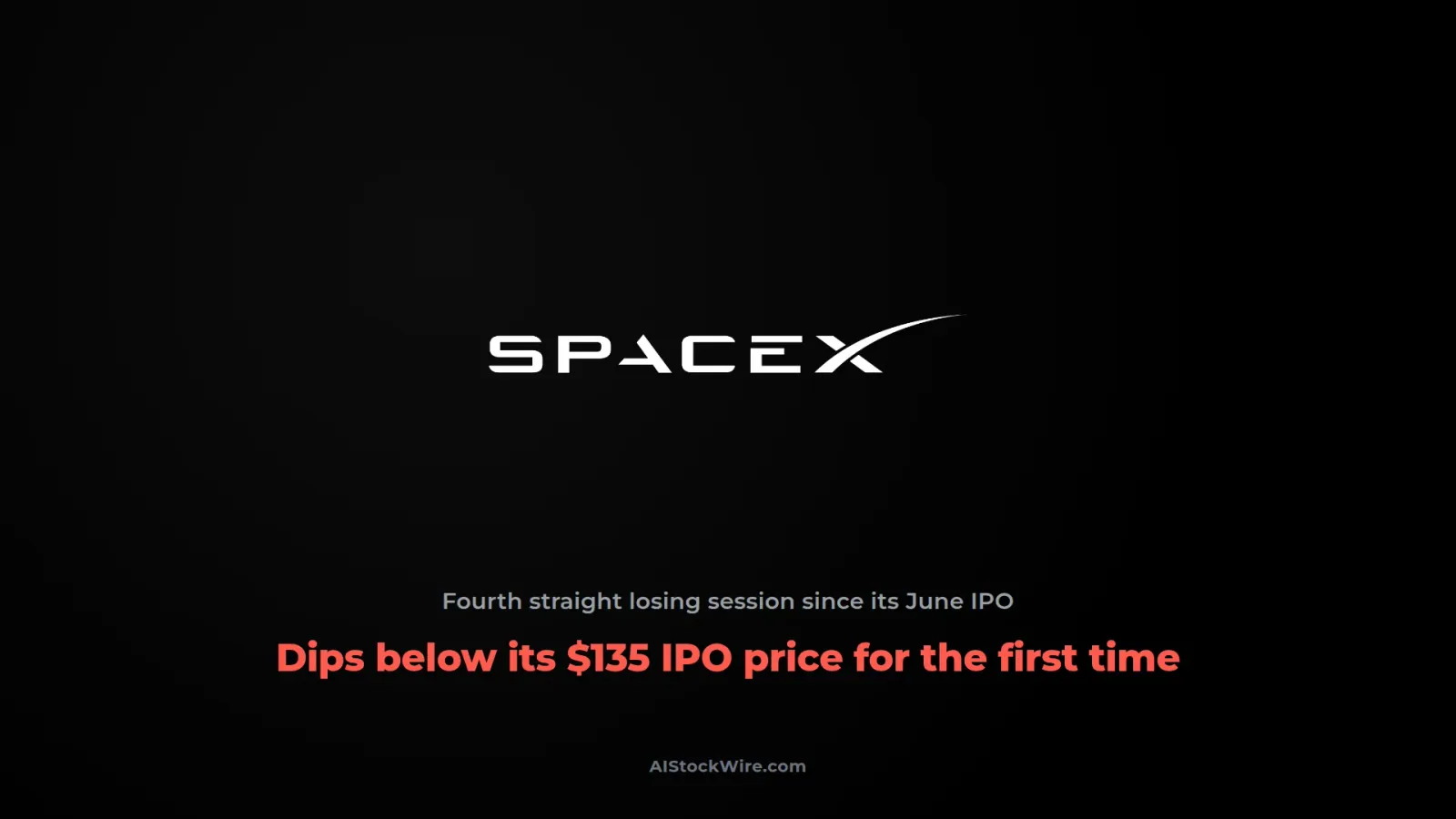
SpaceX briefly fell below its IPO price today, and the revenue never supported a $2 trillion valuation
SpaceX dipped as low as around $132 on Wednesday, briefly trading below its $135 IPO price for the first time, before closing at $135.27, just pennies above it. With about $18.7 billion in revenue last year, a $2 trillion valuation was always a stretch, and Morningstar said as much before the IPO even priced.
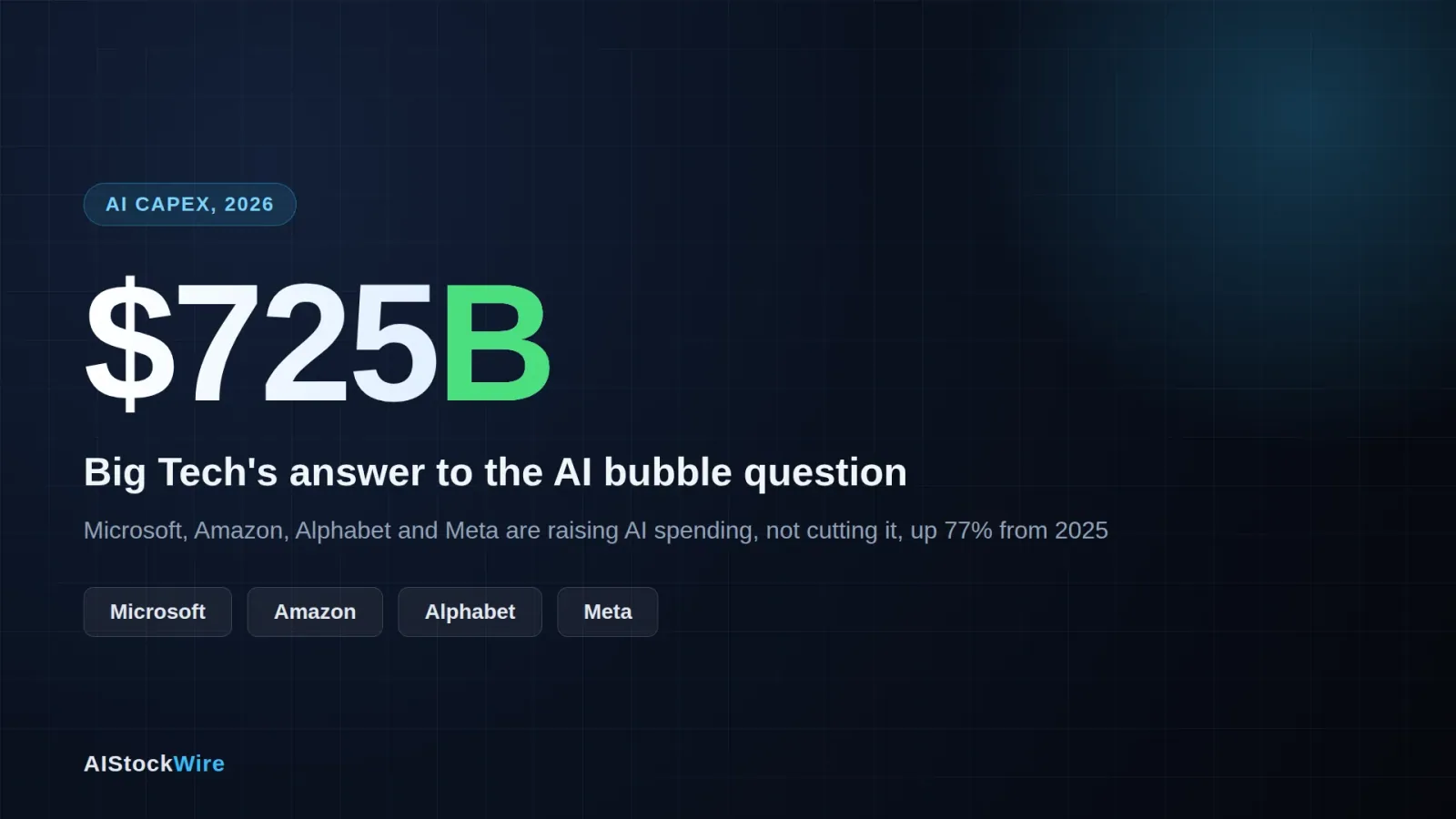
Big tech is about to spend $725 billion on AI data centers. That's not what a bubble looks like.
Microsoft, Amazon, Alphabet and Meta are guiding to roughly $725 billion in combined AI capex for 2026, up 77% from last year. States are moving to regulate the data centers that money builds, but the real risk to watch is that spending now outpaces free cash flow.
The Close, July 14: IBM lost a quarter of its value, and SK Hynix's Nasdaq stock jumped 27%
IBM lost about a quarter of its value in a single session after a weak preliminary report, and the damage spread across enterprise software. SK Hynix's brand-new Nasdaq stock went the other way, jumping 27% on a day chips broadly rallied.
Bitcoin miners are becoming AI landlords. Here's how far each one has actually gotten.
Eight bitcoin miners are pitching the same AI pivot, but they're nowhere near equally far along. IREN and TeraWulf already have AI revenue flowing. Hut 8, Cipher and Applied Digital have billions in signed leases that haven't started billing yet. CleanSpark still just mines bitcoin.

Inflation fell for the first time since 2020, the Kospi closed green, and IBM still crashed 23% (July 14, 2026)
June CPI fell 0.4%, the first monthly decline since 2020, and chips bounced. Then IBM missed on preliminary results, lost roughly 23%, and dragged Workday, ServiceNow and Adobe down with it. CleanSpark jumped 8% on a $6.6 billion AI data center lease, and the Kospi closed green before the CPI number even existed.
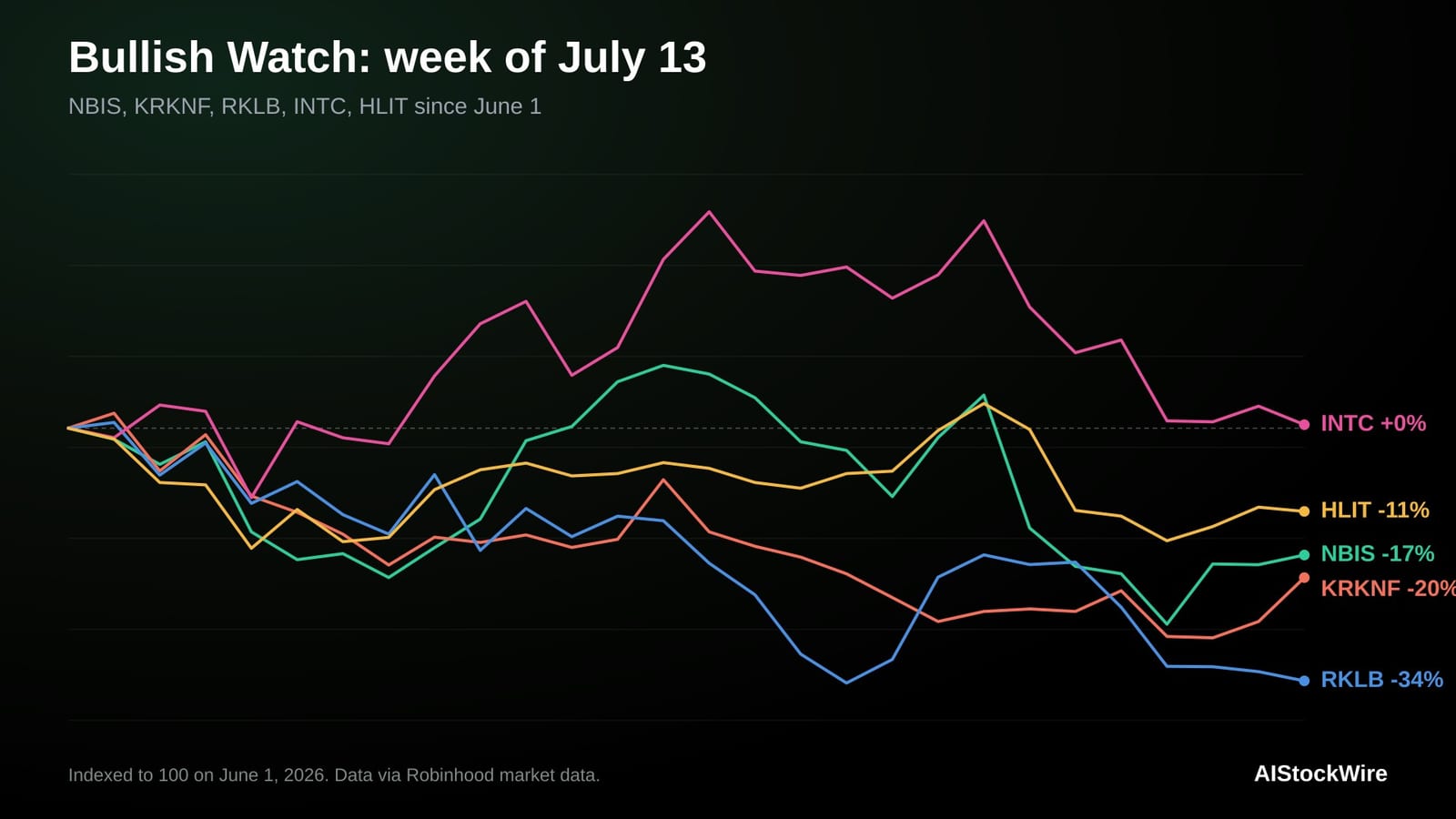
Bullish Watch, week of July 13: the market panicked over a Meta headline, and got it wrong
This week's watchlist, updated through Tuesday: Nebius gave back its early bounce on a data-center headline unrelated to its business, Kraken Robotics is holding up best of the five, Intel swung from a 6% drop to a 4.5% rally in two days, and Rocket Lab and Harmonic are still finding their footing.