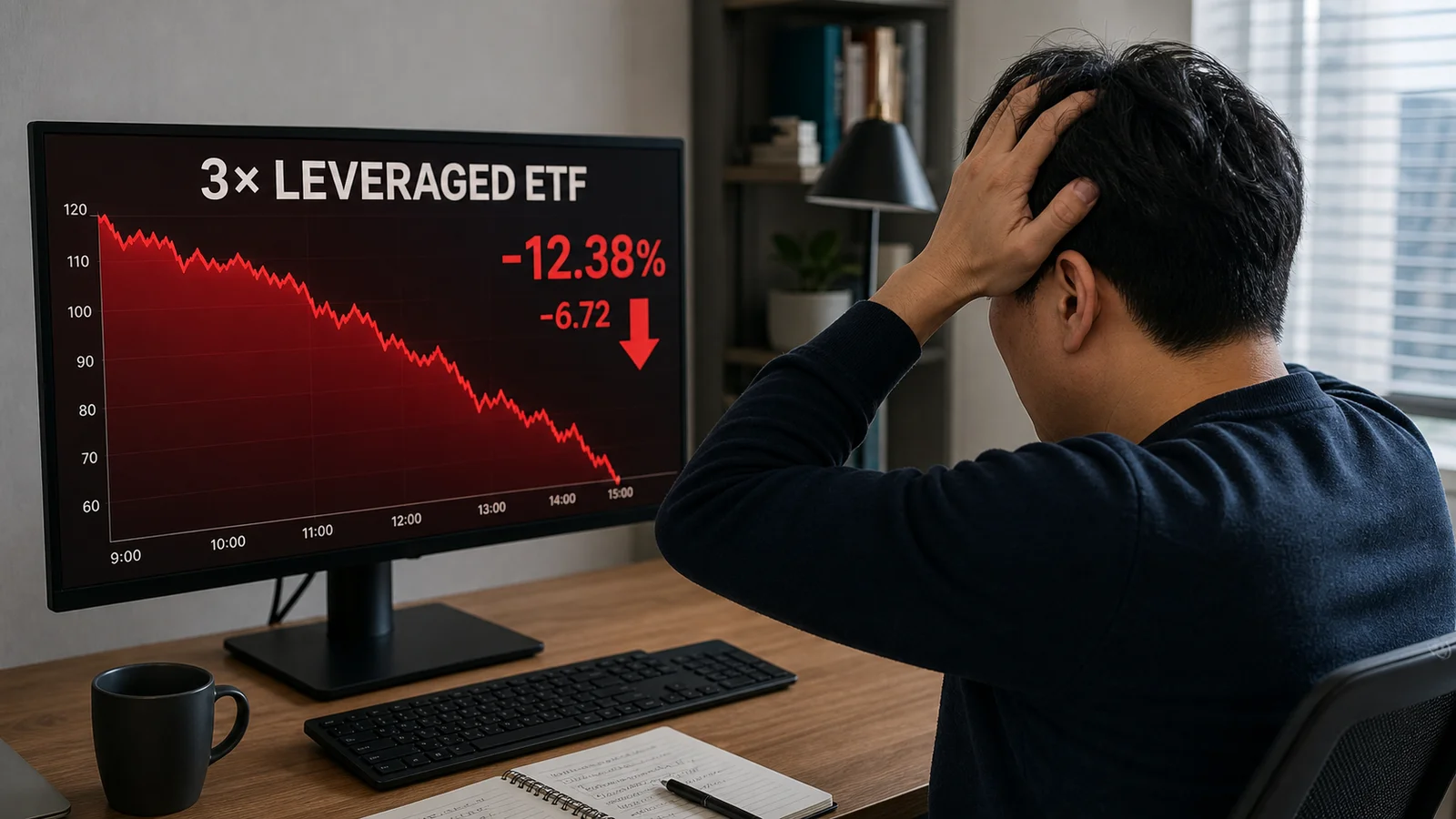
Korean investors put $798 million into a 3x leveraged semiconductor fund (SOXL) in one week. It fell 9.5% the next session.
Korean investors made a 3x semiconductor fund their number one overseas purchase in the week of Nvidia's earnings, with $798.04 million going in. That's about 58 times what they put into Nvidia itself.
A day before Nvidia (NVDA) earnings, OpenAI says its Jalapeño chip beats it on efficiency
OpenAI used a Hot Chips presentation to claim its custom Jalapeño chip beats Nvidia on inference efficiency, one day before Nvidia reports. The benchmarks are real, and so are the caveats.
Nasdaq rebounds before Nvidia (NVDA) earnings, with options pricing a $313 billion swing in the stock
The Nasdaq rose about 0.7% Tuesday, recovering Monday's chip-led drop, one day before Nvidia reports. Wall Street expects about $92 billion in revenue, double a year ago.
Nvidia (NVDA) fell six straight days. Earnings will test the $775 billion AI spending boom.
Nvidia enters its Aug. 26 earnings report on a six-session losing streak, its longest since 2022. It has beaten EPS estimates for 14 quarters straight, and the stock still fell the next day six of the last eight times.
Memory chip prices are soaring. So why are Micron (MU), SanDisk (SNDK) and SK Hynix (SKHY) falling?
Korea's chip exports nearly tripled in the first 20 days of August and its semiconductor export price index has quadrupled since 2023. Micron, SanDisk, SK Hynix, Samsung and Kioxia all peaked within one week in June and have fallen 21% to 51% since.
Broadcom (AVGO) is reportedly seeking more than $60 billion for a single AI deal
Broadcom is reportedly seeking more than $60 billion in debt, including lenders Blackstone and Apollo, for an AI infrastructure deal that would benefit Anthropic, Bloomberg reports.
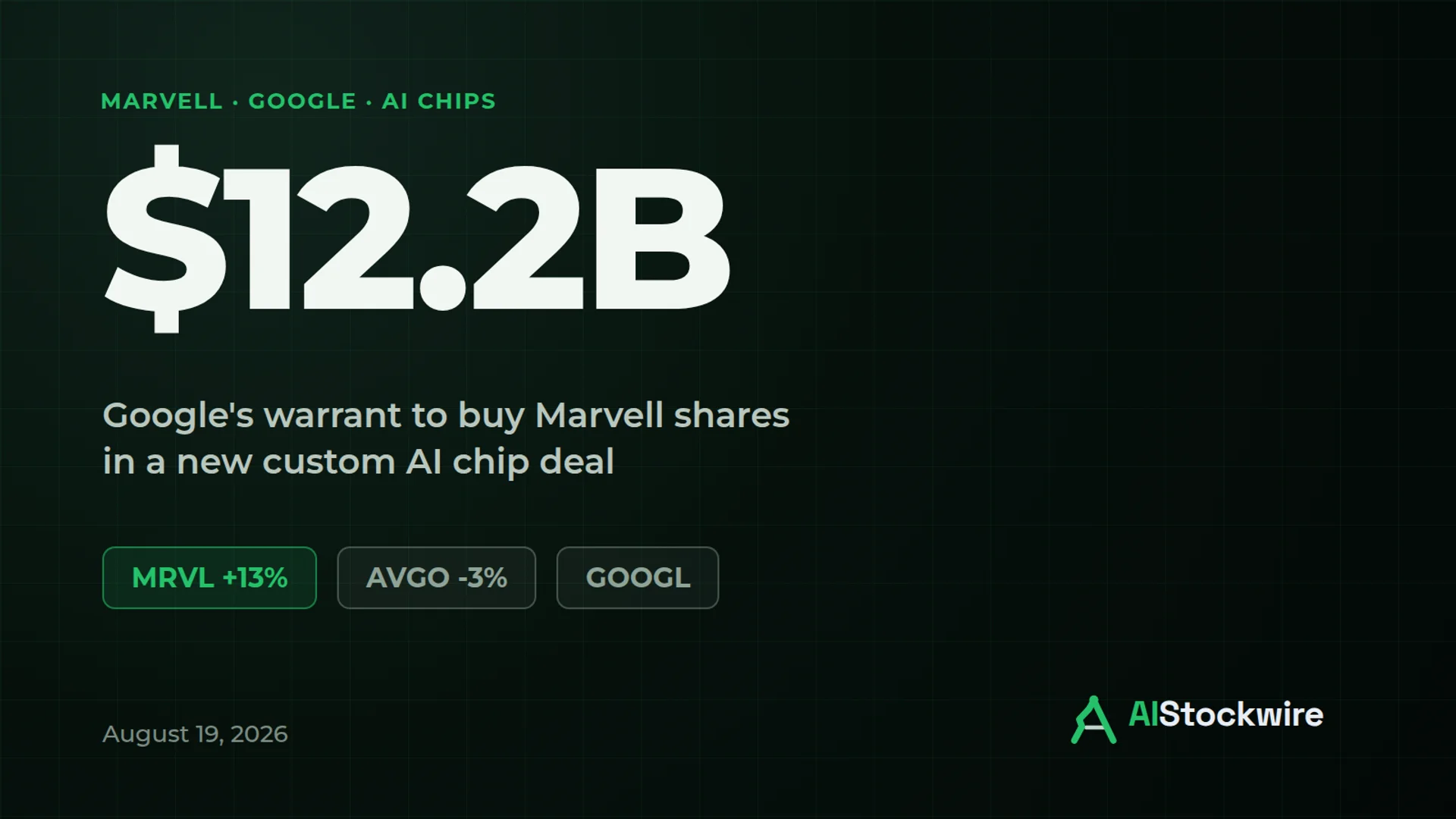
Marvell (MRVL) jumps 13% after giving Google a warrant worth up to $12.2 billion in new AI chip deal
Marvell signed a custom AI chip deal with Google and issued a warrant for up to 58.97 million shares at $206.58 each, worth about $12.2 billion. MRVL jumped as much as 13%, while Broadcom and other AI chip suppliers fell.
For the first time, more money is going into running AI than building it. What that means for Nvidia (NVDA), Broadcom (AVGO), Marvell (MRVL) and AMD
Inference, running AI models, now costs more than training them, and that rewards custom chips and memory over raw GPUs. Here's what it means for Nvidia, Broadcom, Marvell, AMD and Micron.

Leopold Aschenbrenner's latest filing shows he closed 13 of his 16 options positions and moved more than half his fund into SanDisk and Micron
Situational Awareness LP reported $8.46 billion of put positions on March 31 and one on June 30. The money went into SanDisk, Micron, Nebius and STMicroelectronics.
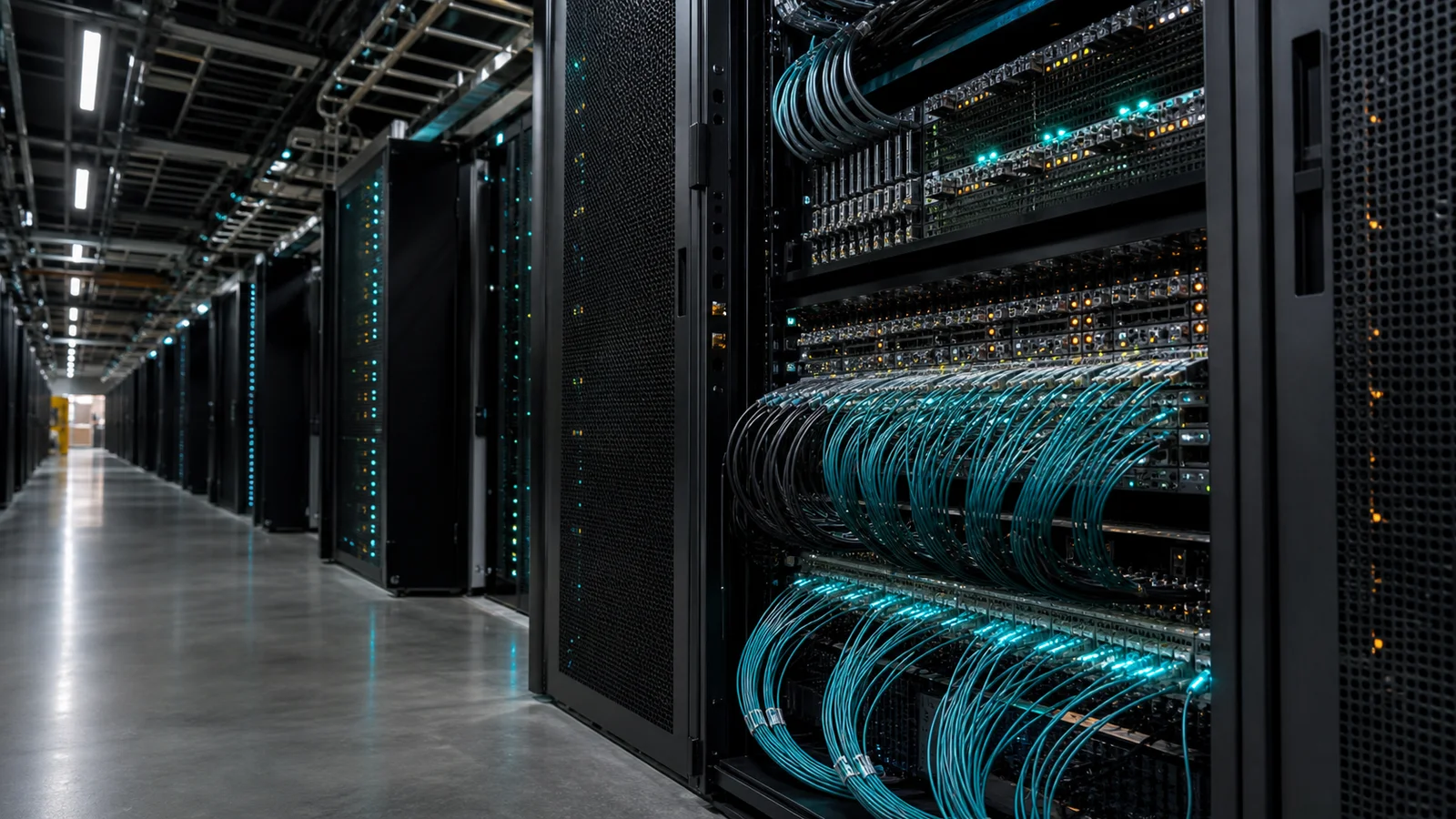
An AI model trains across 100,000 chips that all have to talk at once. The stocks that wire them: Arista (ANET), Broadcom (AVGO), Coherent (COHR) and Astera Labs (ALAB)
Tens of thousands of GPUs have to act like one machine, and the network that connects them is a fast-growing slice of every AI buildout. Here's what Arista, Broadcom, Marvell, the optics makers and Astera Labs each do.

The AI trade rotates to a new sector every week. Which one is it going to be this week?
The AI trade has rotated by sector almost every week: software, then photonics, then memory. So which corner of AI runs next? I make the case for the one group that keeps riding along without ever leading.

You can trade single-stock options premarket starting August 17 at 7:30 a.m. ET. The first session includes Nvidia (NVDA), Tesla (TSLA), Apple (AAPL) and 18 more.
Cboe Options Exchange begins trading single-stock options at 7:30 a.m. ET on Monday, Aug. 17, two hours before the regular open. Limit orders only, no market or stop orders, and trades in the new sessions do not count toward the day's high and low.
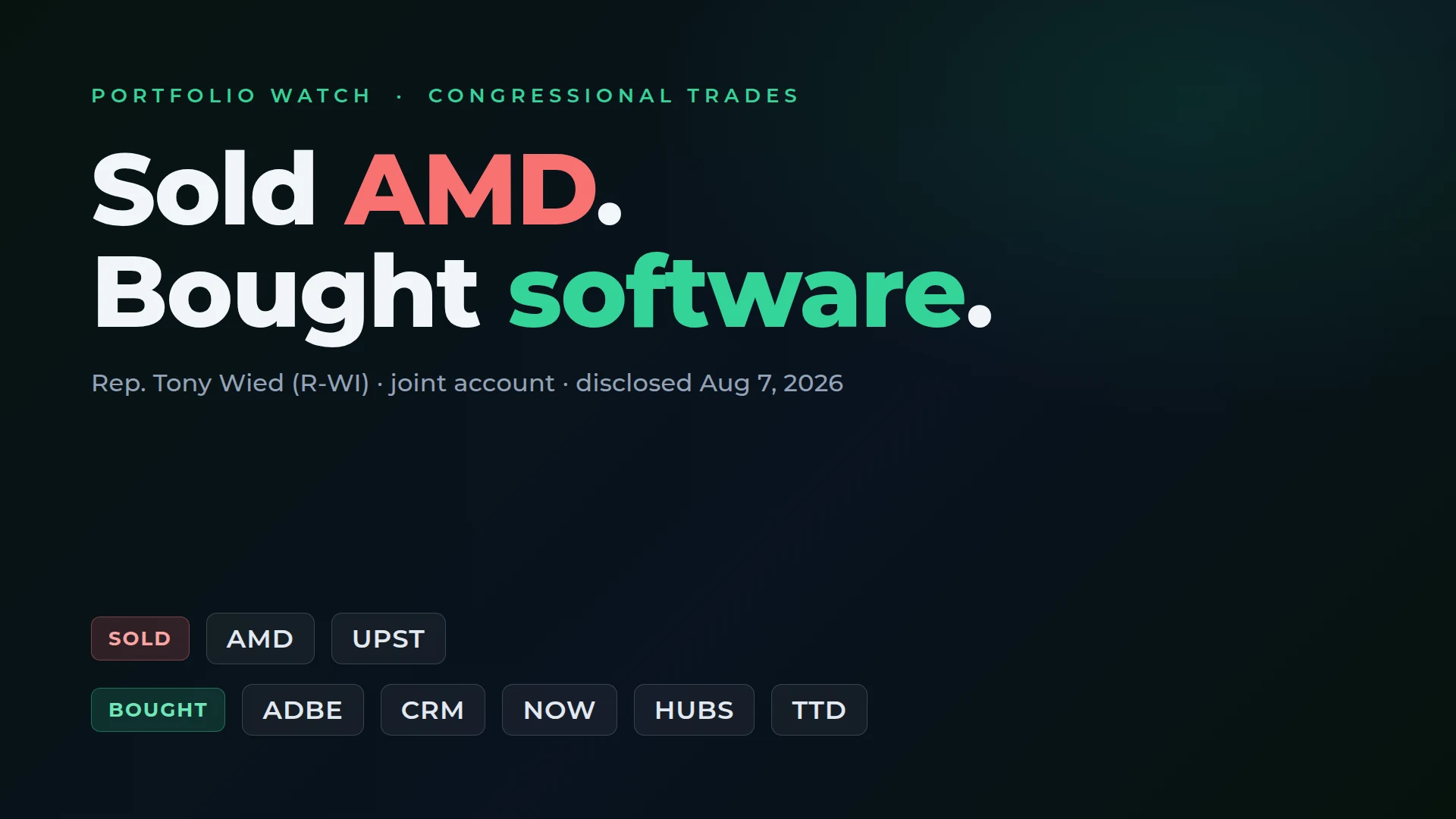
Congressman Tony Wied sold up to $250,000 worth of AMD stock and loaded up on software stocks
Wisconsin Rep. Tony Wied sold up to $250,000 of AMD on June 3, then bought Adobe (ADBE), Salesforce (CRM), ServiceNow, HubSpot and The Trade Desk six days later. His February filing showed the same move out of chips and into software.
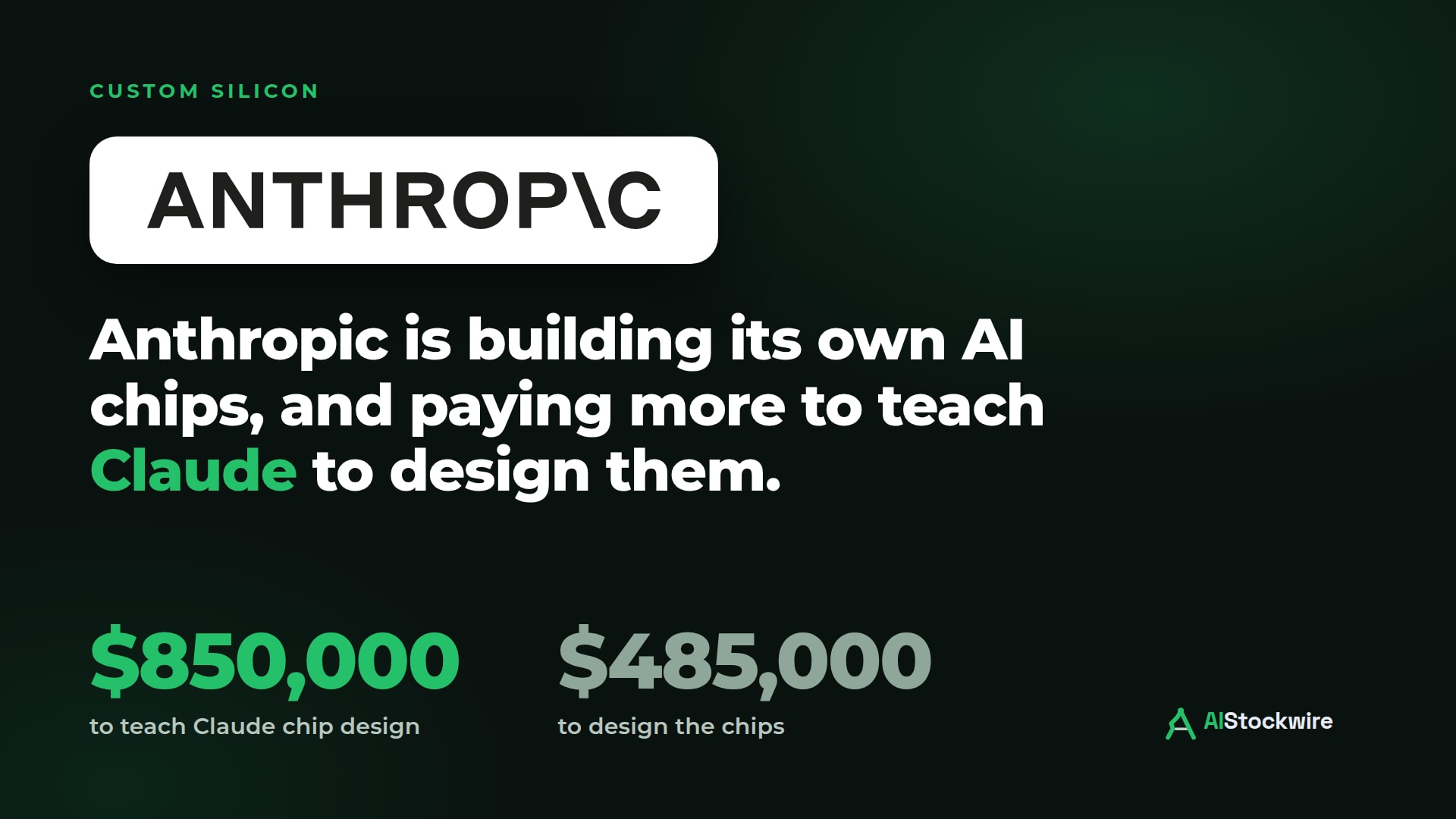
Anthropic is building AI chips and paying up to $850,000 to teach Claude how to design them.
Anthropic confirmed Wednesday it is building an in-house Custom Silicon team for Claude, the first time it has said so publicly. The job listings pay $320,000 to $485,000 for the chip designers and $500,000 to $850,000 for the researcher teaching Claude to do the design work.
Citadel bought Leopold Aschenbrenner's stock book. Two outlets say he kept part of it, and a filing due Monday settles it.
Bloomberg and Reuters both name Ken Griffin's Citadel as the buyer of Situational Awareness's stock book, and both say bulk, not all. CNBC said the entire public book went in one block to one buyer. A Form 4 on the SharonAI (SHAZ) stake is due Aug. 3, an initial 13D or 13G from Citadel on Aug. 6, and the fund's own quarterly report on Aug. 14.
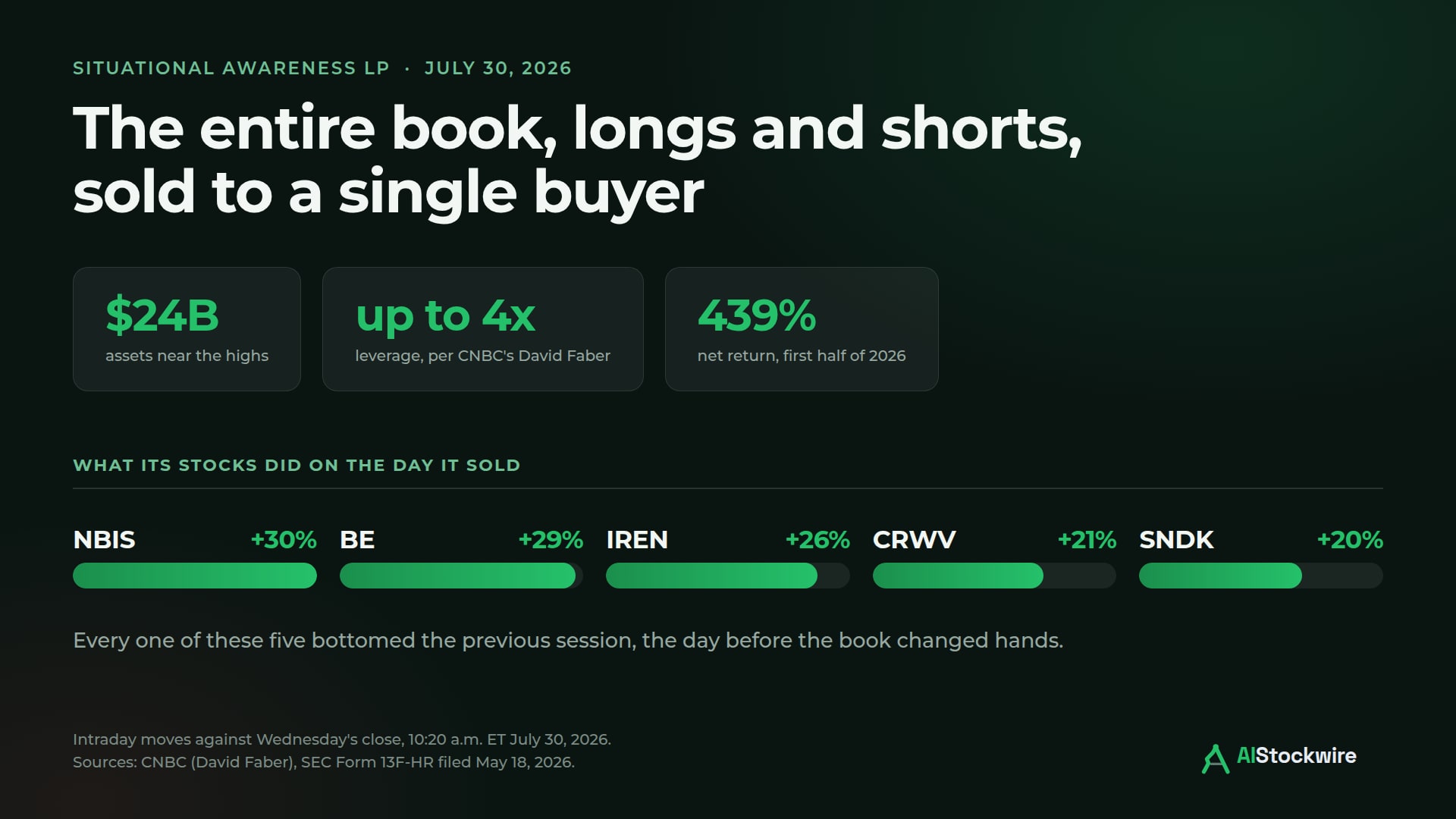
Leopold Aschenbrenner's AI fund sold its levered stock book, longs and shorts, to a single buyer. It was levered as much as four times.
CNBC's David Faber reported that Situational Awareness sold its entire public equities book, longs and shorts together, to a single buyer. The fund reached $24 billion near its highs and ran leverage of as much as four times. Its last public filing shows 62% of a $13.68 billion book was bets against chip stocks, and the stocks it owned outright fell twice as far.
Microsoft (MSFT) grew Azure 43% with $678 billion already booked. That is what Nvidia (NVDA) and Micron (MU) needed to hear.
Microsoft held its capital spending outlook near $190 billion, grew Azure 43% and rose 7.6% after hours. Meta raised its capex range by $10 billion at the low end, missed on earnings at $6.18 against a $7.14 estimate, and fell 9.0%. The market stopped scoring hyperscalers on capex announcements and started scoring them on whether the revenue arrives. That is a better setup for Nvidia, Broadcom and Taiwan Semiconductor than another spending headline, though it does nothing about the memory supply problem that actually caused July.
Korea's Kospi fell 10.84% and halted trading. Nvidia (NVDA) is flat and Micron (MU) is down 10% (July 28, 2026)
Korea's Kospi closed at 6,023.66 on Tuesday, down 10.84%, its fourth largest one-day fall on record, after Korea Exchange stopped all trading for 20 minutes. Samsung and SK Hynix each lost more than 13%. The US carryover went into memory and storage, with Sandisk (SNDK) down 14.52% and Micron (MU) down 9.54%, while Nvidia (NVDA) held flat and the Dow rose.
Korea signed $950 billion in AI deals, then foreign investors sold 2.9 trillion won of SK Hynix and Samsung (July 27, 2026)
Monday was the first Seoul session after Korean companies signed about $950 billion of AI agreements in San Francisco. Kospi opened 1.7% higher, then fell almost 2% when China's CXMT closed its Shanghai debut up 465.82%. Foreign investors sold a net 2.9039 trillion won of Kospi stocks, and the two they sold most were SK Hynix and Samsung Electronics.
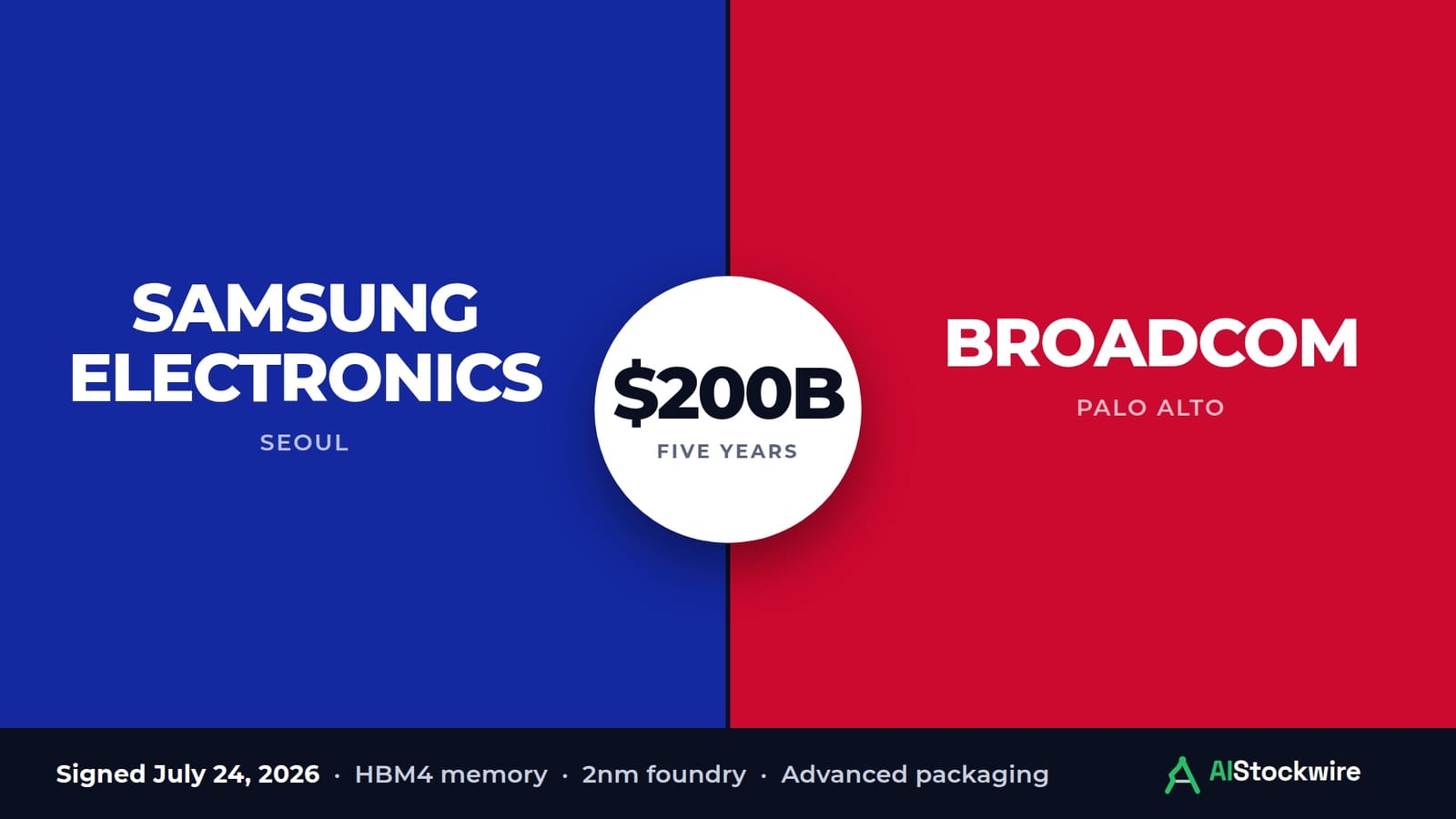
Samsung just signed a $200 billion deal with Broadcom (AVGO), a 32-year TSMC (TSM) customer.
Samsung Electronics signed a memorandum with Broadcom on July 24 covering more than $200 billion of work over five years, through 2030. Broadcom has had TSMC make its chips since 1994, and about 95% of the wafers it outsourced last year came from there. Samsung's foundry holds 6.5% of the world market against TSMC's 72%, and Seoul had closed for the week before any of it was announced.
Tesla (TSLA) and Alphabet (GOOGL) are falling hard. The rest of the AI trade isn't (July 23, 2026)
Tesla and Alphabet kept falling through Thursday morning even as chipmakers, neoclouds and photonics stocks held up fine. Oil topped $100 a barrel after Trump threatened to bomb Iranian infrastructure over any new attack on shipping.
Alphabet (GOOGL) raised AI capex to $205 billion, its third hike this year. Nvidia (NVDA) and Broadcom (AVGO) barely moved after hours
Alphabet raised its 2026 capex guidance to $195-205 billion during Wednesday's call, its third increase this year, and GOOGL fell as much as 5% in extended trading. But the chip and power stocks that are supposed to benefit from that spending, Nvidia, Broadcom, TSMC, Micron, Vistra and Constellation, barely moved.
Micron (MU), SK Hynix and AMD just gave chip stocks their first back-to-back gain in two weeks (July 21, 2026)
Micron (MU) closed up about 12 percent, SK Hynix's ADR about 14 percent, and AMD 8 percent Tuesday, chip stocks' first back-to-back gain in two weeks. A Bank of America upgrade on memory demand and a new AMD-Microsoft Azure deal did the heavy lifting.

Jim Cramer's tech calls are still lagging the rest of his book. Intel is 1 for 5, and IBM crashed the day after his second buy call.
Jim Cramer's tech calls are still his weak spot. Intel is 1 for 5 since June, IBM is down nearly 30% since his back-to-back buy calls, and his tech picks trail the Nasdaq-100 by more than three points a call even after Tuesday's chip bounce.