Key points
- New Mexico's land commissioner denied the gas pipeline for Oracle's (ORCL) Project Jupiter Stargate site a second time in a July 14 letter; Energy Transfer has 30 days to appeal.
- SemiAnalysis says the site, and the record 2.45 GW Bloom Energy (BE) fuel cell order powering it, now face a 1 to 2 year delay risk.
- BE fell 13.6% Thursday as the denial circulated and closed Friday at $214.96, down about 39% from its late-June record high.
The biggest site in the whole Stargate buildout has a plumbing problem, and the stock most exposed to it isn't Oracle (ORCL). It's Bloom Energy (BE).
Project Jupiter is the giant AI data center campus that Oracle, OpenAI and developer BorderPlex Digital Assets are building in Dona Ana County, New Mexico, one of the flagship sites in the $500 billion Stargate program. The deal the county approved calls for $50 billion of investment in the first five years and up to $165 billion over 30 years. For a state the size of New Mexico, that is an enormous project, and it comes with roughly 4,000 construction jobs attached.
The biggest fuel cell order ever came with a catch
Project Jupiter originally planned to power itself with gas turbines and diesel backup generators. Locals pushed back hard on the emissions and water use, and on April 27 Oracle and its partners announced a new plan: scrap the turbines and run the whole campus on up to 2.45 gigawatts of Bloom Energy fuel cells, in what would be the largest fuel cell deployment ever announced. Within two days of the announcement BE shares were up more than 20%, and they went on to hit a record $351.28 in late June.
Here's the catch. Bloom's fuel cells don't burn gas with a flame, but they still run on natural gas. Documents filed with New Mexico's environment department say the fuel cells depend on "a robust natural gas pipeline system." That gas is supposed to arrive through a new pipeline segment called the Green Chile Project, built by Energy Transfer (ET). According to SemiAnalysis, the plan calls for 400,000 dekatherms of gas per day moving through that one line. No pipeline, no gas. No gas, no fuel cells.
Two denials and counting
That pipeline needs to cross state trust land, and the official who controls state trust land keeps saying no. Commissioner of Public Lands Stephanie Garcia Richard denied the right-of-way request in March. Energy Transfer asked her to reconsider. In a July 14 letter, she denied it again, writing that the project would "undoubtedly" benefit Project Jupiter's investors but offers little for state lands, and that "the burden that the project will impose on New Mexico's water and other natural resources, and on the surrounding community, is extreme."
Energy Transfer has 30 days to appeal and would not tell reporters whether it plans to. And the pipeline is not the project's only regulatory headache. FERC staff filed a protest on the pipeline in April, the state has scheduled its air-quality permit hearing for October, and New Mexico's attorney general opened an investigation on July 9 into allegedly fraudulent letters of support submitted in the project's name, after residents said their names were used without permission.
SemiAnalysis sees a 1 to 2 year delay risk
That pile-up is what prompted SemiAnalysis, the semiconductor research firm whose datacenter model moves markets, to post a thread Saturday morning calling out a 1 to 2 year delay risk for the site and for Bloom's order. The firm notes the original gas supply agreement assumed the pipeline would be in service by August 15, 2026, a date that now looks unreachable, and its model already pushed first power at the site out to 2029. To be clear, that is SemiAnalysis's estimate, not a company announcement.
Oracle disputes the framing. A spokesperson told Source New Mexico that "the project remains on-schedule" and pointed to more than 440 New Mexicans already working on site, plus $50 million pledged to fix Dona Ana County's water system. Both things can be true at once: construction can keep moving while the power plan that feeds the finished buildings slips.
What it means for the stocks
The market did not wait for the thread. BE fell 13.6% on Thursday, the day the second denial was reported, and traded as low as $194.60 Friday before bouncing to close at $214.96. That still leaves the stock down about 39% from its June record, though almost nine times higher than a year ago, when it traded near $26. A $61 billion market cap now rests on Bloom turning AI power deals into delivered gigawatts, and Project Jupiter is by far the biggest one on the books (we covered the whole AI power trade, including Bloom's rivals in nuclear and gas, in our AI power problem piece).
Oracle shares barely reacted, closing Friday at $126.41, up 1.8%. The market seems to be treating this as Bloom's problem, which is fair as far as revenue timing goes, but a 1 to 2 year slip at the biggest Stargate site would also slow the capacity Oracle is counting on to serve OpenAI (we looked at how much of Oracle's story depends on that backlog when the stock crashed 59%). It also would not be the first time SemiAnalysis called a major AI infrastructure delay before the companies did; its Nvidia Kyber rack delay call is the same playbook.
What to watch next
Three dates matter from here. Energy Transfer's appeal window runs 30 days from the July 14 letter, so mid-August. The air-quality permit hearing lands in October. And Bloom reports second-quarter earnings on July 28, where analysts will push management to say whether the Jupiter timeline has moved. My read: one land commissioner saying no twice is not the end of a $165 billion project, and Bloom has other customers. But the easy phase of the AI power trade, where every announcement counted as revenue, is ending. From here, the stocks that win are the ones whose gigawatts actually show up on schedule.
Related coverage
- AI's power problem: nuclear, gas, and the stocks feeding the boom
- Oracle (ORCL) stock crashed 59%: is it near the bottom?
- SemiAnalysis says Nvidia's Kyber AI rack is delayed to 2028
Sources
- SemiAnalysis, thread on Project Jupiter delay risk
- Source New Mexico, Land commissioner blocks Project Jupiter-related pipeline
- Oracle, Oracle, BorderPlex, and Bloom Energy to Power Project Jupiter
- Data Center Dynamics, Oracle to deploy up to 2.45GW of Bloom fuel cells
- Albuquerque Journal, Lands commissioner nixes Project Jupiter pipeline for second time
- Source New Mexico, NM AG to investigate alleged fraudulent letters
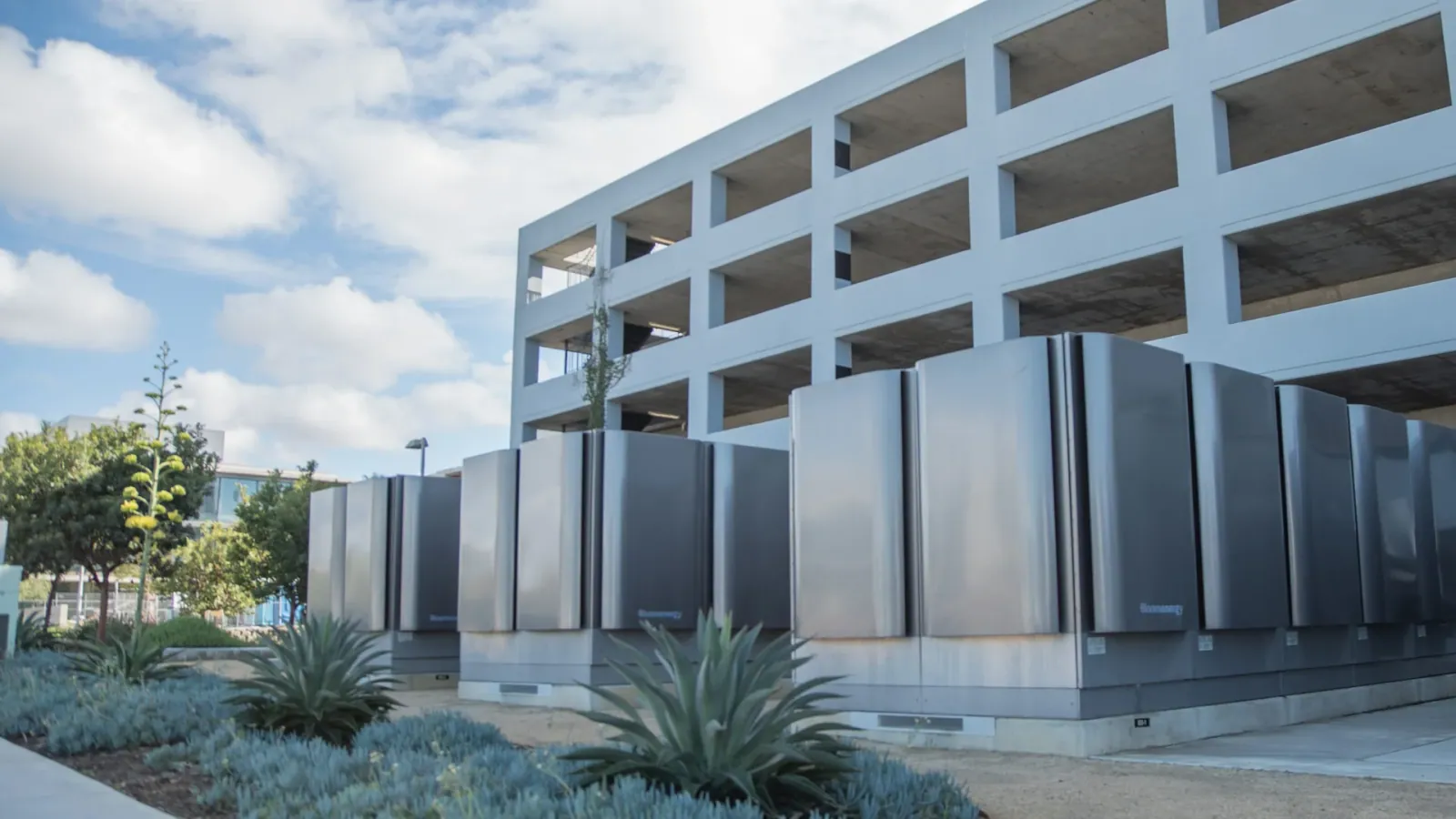
Cover photo: Bloom Energy fuel cell servers. Bloom Energy press kit.
This is general market commentary and opinion, not investment advice. Markets can go down as well as up, and you can lose money. Always do your own research and consider speaking with a licensed financial professional before making any investment decision.