Key points
- GE Vernova (GEV) signed 20 gigawatts of new gas turbine contracts in the second quarter of 2026 and shipped 3 gigawatts.
- That leaves 116 GW under contract against about 20 GW of annual output, a line that now stretches years out.
- Buyers who cannot wait are paying for onsite power instead, and Bloom Energy (BE) reported its first quarter above $1 billion in total revenue.
On July 22, 2026, GE Vernova (GEV) reported second-quarter results showing that customers signed 20 gigawatts of new gas equipment contracts during the quarter, and that the company shipped 3 gigawatts.
The order book behind that gap grew from 100 GW to 116 GW in three months. Of that total, 53 GW is firm equipment backlog and 63 GW is paid slot reservation agreements, deposits that hold a place in the production line ahead of a firm order. Scott Strazik, GE Vernova's chief executive, said in the release: "We now expect to have at least 125 GW of gas equipment under contract by year-end 2026."
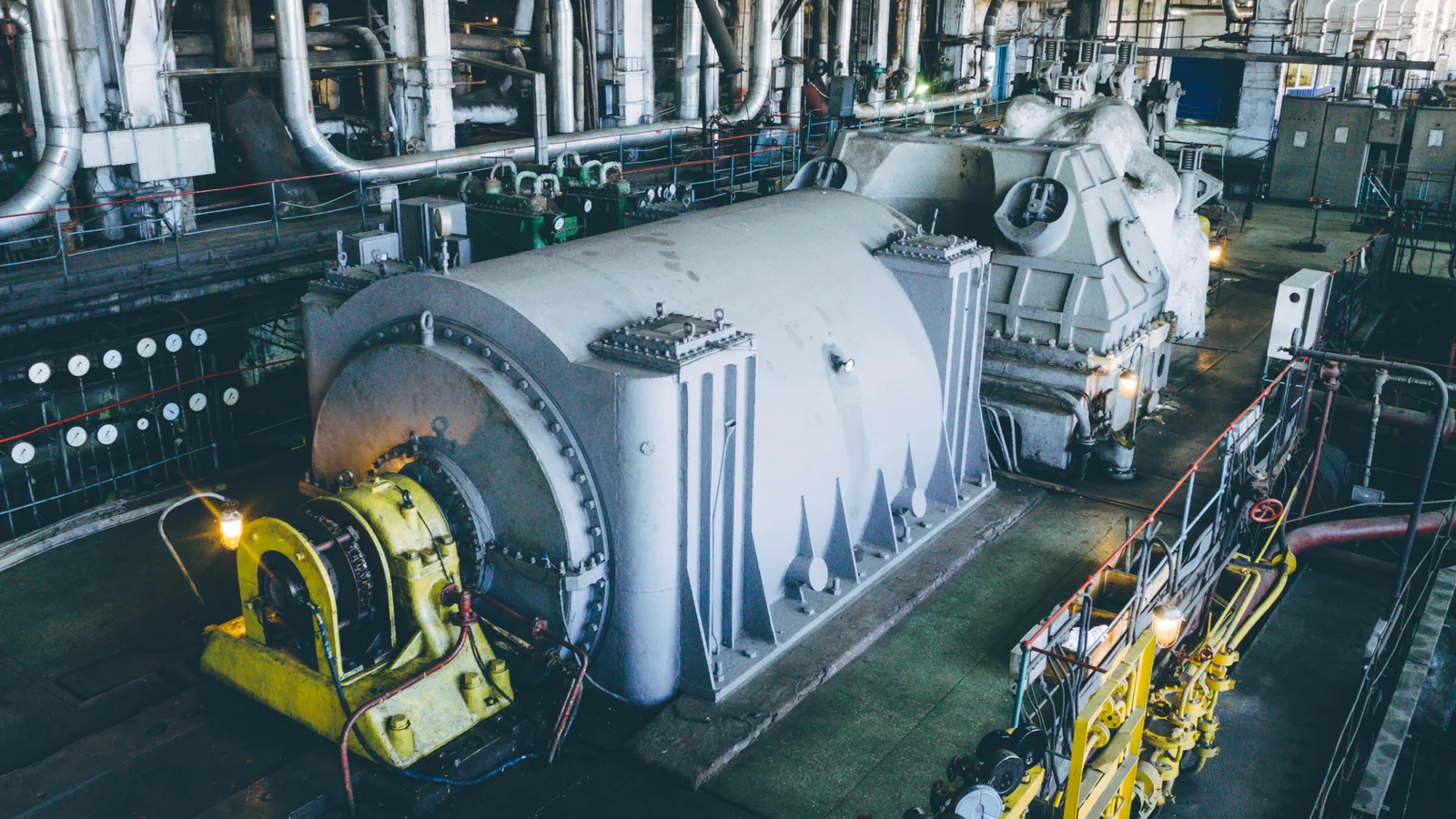
Output is the constraint. Strazik put the ramp at 20 GW of annual gas turbine output in the third quarter of 2026, rising to 30 GW in 2030. At 20 GW a year, the 116 GW under contract is close to six years of production, our arithmetic on two disclosed figures rather than a company forecast. The actual period would be shorter as production expands, but the ratio shows the scale of the current queue.
How long is the wait for a gas turbine now?
Availability had thinned out earlier in the year. Power Engineering reported in April that GE Vernova entered 2026 with about 10 GW of open 2029 capacity and finished the first quarter with about 10 GW left across 2029 and 2030 combined.
On that quarter's call, Strazik said the later slots went first because buyers were matching turbine delivery to their EPC schedule, the engineering, procurement and construction timeline for the plant itself. "We sold a lot of 2030 slots because ... we had a lot of customers looking at planning with EPC schedules and other dynamics needed the '30 slot more than '29."
Going to a competitor doesn't solve it. The large-frame turbine market is dominated by three suppliers. Siemens Energy closed its fiscal third quarter with a firm gas turbine backlog of 69 GW after booking 15 GW of orders and shipping 6 GW, according to Utility Dive: orders booked at more than twice the rate equipment leaves the factory. Mitsubishi Heavy Industries is the third. It sits a step earlier than the grid connection queue, and apart from the transformers and switchgear in our piece on the power equipment layer.
What data centers are buying instead
Bloom Energy (BE) makes solid oxide fuel cells that run on natural gas and sit on the customer's own site. On April 13, 2026, it announced that Oracle (ORCL) had agreed to procure up to 2.8 GW of those systems, with 1.2 GW contracted initially.
Bloom's second quarter, reported July 28, 2026, was its first above $1 billion: revenue of $1.065 billion, up 165.5% from a year earlier, with product revenue up 215.4%. Founder and chief executive KR Sridhar described the buyer shift directly, saying customers "who traditionally defaulted to combustion technologies are now proactively choosing Bloom as a superior power solution." On June 30, Brookfield raised its framework for financing Bloom-powered projects from $5 billion to $25 billion.
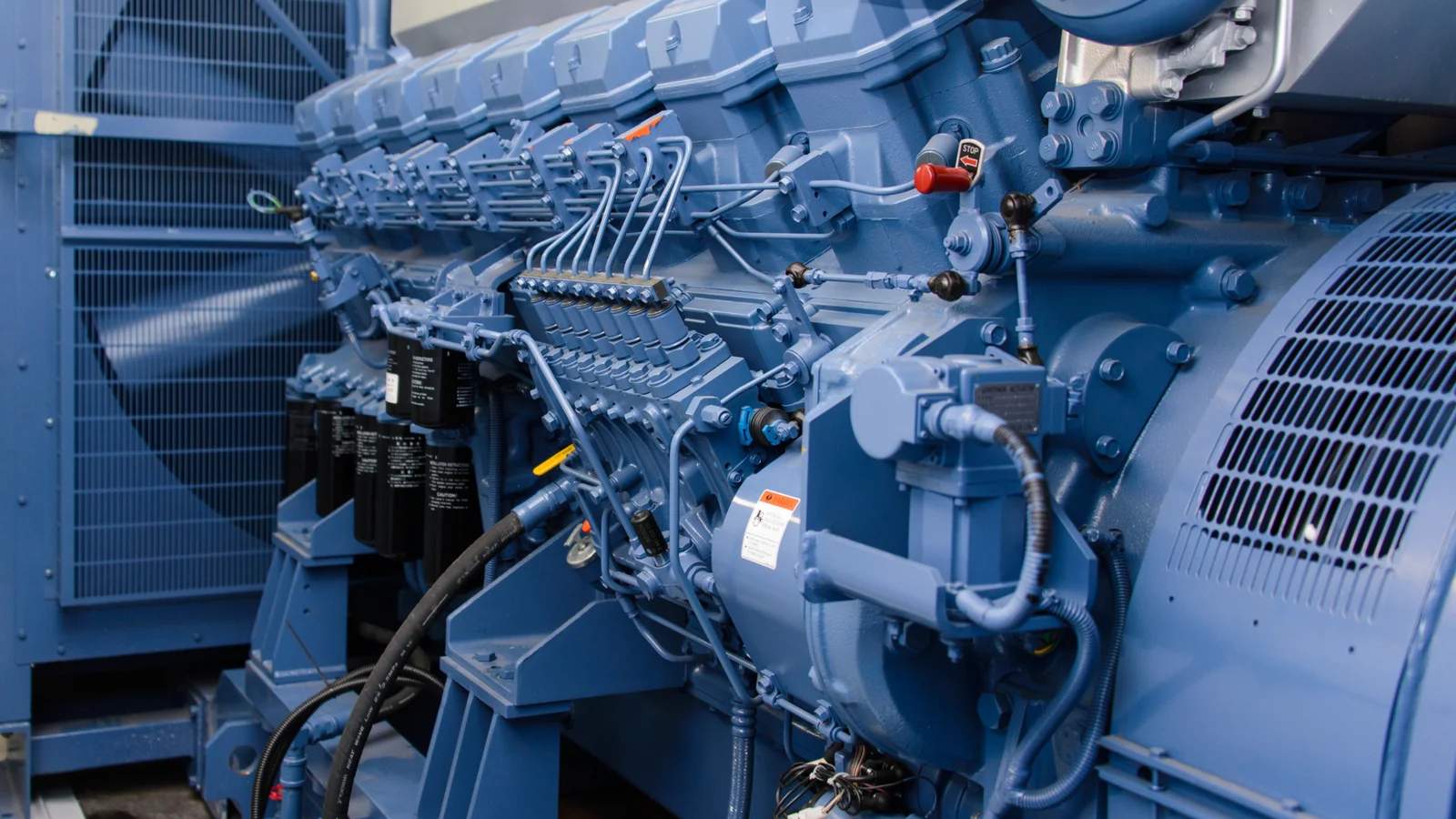
A second workaround is older and less glamorous. Power Solutions International (PSIX) builds emission-certified reciprocating engines, the generator sets that have backed up data centers for years and are now being sold as primary power. Its second quarter, reported August 6, 2026, showed net sales of $152.5 million, down 21% from a year earlier on shipment timing, with gross margin of 27.1%.
A third route is to let somebody else own the plant. NRG Energy (NRG) disclosed on August 4, 2026 that it and a large cloud and AI hyperscaler are aligned on principal commercial terms for a 1.2 GW combined cycle gas plant in Texas, subject to final documentation and approvals. Robert Gaudette, NRG's president and chief executive, called it a template: "This is the model for how large load growth should work. The customer supports the investment, with reliability and affordability protected for all."
Every pathway discussed here ultimately depends on natural gas, which is the layer EQT Corporation (EQT) sells. On July 21, 2026 the producer announced a 10-year agreement to supply 325,000 dekatherms a day to the CPV Shay Energy Center, a 2 GW plant in West Virginia, priced against PJM power prices rather than in-basin gas prices. President and chief executive Toby Rice said in the release: "As power generators and data center developers increasingly look to secure reliable, long-term energy supply, EQT has become the partner of choice in Appalachia."
| Company | What it sells into the power gap | A number, as reported |
|---|---|---|
| GE Vernova (GEV) | Heavy-duty gas turbines, the thing that is sold out | 116 GW of backlog and slot reservations against about 20 GW of annual output (Q2 2026) |
| Bloom Energy (BE) | Solid oxide fuel cells installed on the customer's site | Revenue of $1.065B, up 165.5% year over year (Q2 2026) |
| Power Solutions International (PSIX) | Reciprocating engine generator sets | Net sales of $152.5M, down 21% year over year (Q2 2026) |
| NRG Energy (NRG) | Owns and runs the plant so the data center does not have to | Terms agreed for a 1.2 GW gas plant in Texas for a hyperscaler (August 4, 2026) |
| EQT Corporation (EQT) | The natural gas everything above burns | 10-year deal for 325,000 dekatherms a day to a 2 GW plant (July 21, 2026) |
What could go wrong
Bloom is the most exposed to its own story. On July 8, 2026, Hunterbrook Media published a report questioning the company's accounting and its supply of scandium oxide, a material used in its fuel cells. Bloom filed an 8-K the next day rejecting the claims as "false and misleading," noting the outlet disclosed it may profit from a decline in the stock, and saying it has "clear visibility into our supply chain to support production of 25GW of fuel cells per year." A securities class action followed on the same facts. Nevins v. Bloom Energy Corporation, filed in the Northern District of California, covers investors from February 27, 2025 through July 8, 2026 and alleges the company misstated its reliance on Chinese scandium. The allegations are untested and Bloom has rejected the underlying claims. A separate June filing put Bloom's market value near $79 billion, against about $5 billion at the end of 2024.
At Power Solutions, demand and revenue haven't been the same line. Its data center demand is real and its quarterly sales still fell 21%. The company said the timing and volume of that revenue "remain subject to customer scheduling, manufacturing throughput, supply chain factors and other variables," and that it is not predicting any specific level of data center revenue in any future period.
The contracts carry the same caveat one level up. A slot reservation is a deposit, not a shipment, and 63 GW of GE Vernova's 116 GW is still in that form. NRG's Texas project is agreed in principle and not yet documented. A slowdown in AI construction would show up here as cancellations first, the same risk carried by the generation names behind the same buildout.
Backlog is the number that would show it, and only some of these companies give you one. GE Vernova's total backlog reached $176 billion, up $13.0 billion in the quarter, and Siemens Energy and Mitsubishi Heavy Industries both report theirs. Our AI backlog tracker lists Bloom Energy as not disclosed, so the fuel cell order book Brookfield just agreed to finance isn't something an outside investor can size.
Power Solutions' interim chief executive and chief financial officer, Kenneth Li, put the state of play about as plainly as anyone in the group has: "Looking ahead, demand for our data center power solutions remains strong. Based on our current production schedule, we expect second-half sales to exceed first-half sales as larger Power Systems orders move into production, although shipment timing and quarterly results may vary."
Sources
- GE Vernova, second quarter 2026 results, July 22, 2026
- Bloom Energy, second quarter 2026 results and Form 8-K of June 15, 2026
- Power Solutions International, second quarter 2026 results, August 6, 2026
- NRG Energy, second quarter 2026 results, August 4, 2026, and EQT Corporation, second quarter 2026 results, July 21, 2026
- Related coverage: the AI power equipment layer
This is general market commentary and opinion, not investment advice. Markets can go down as well as up, and you can lose money. Always do your own research and consider speaking with a licensed financial professional before making any investment decision.