Key points
- Situational Awareness committed $500 million to Source Foundry, a startup targeting ASML's (ASML) lithography monopoly.
- The bet lands a week after the fund lost 67% in July and sold its book to Citadel the same week Leopold Aschenbrenner got married.
- Aschenbrenner also holds a $494 million ASML put position from the first quarter, taken out before this new stake.
Leopold Aschenbrenner's Situational Awareness hedge fund is putting $500 million into Source Foundry, a stealth chip-equipment startup. $400 million of that landed the first week of August. The Wall Street Journal reported the deal on Aug. 7. Source Foundry is going after one of the most dominant monopolies in technology: ASML's (ASML) hold on advanced chipmaking equipment.
Source Foundry was founded in 2025 by two Stanford researchers, Abdulmalik Obaid and Joe Burg. The company is valued at about $5 billion and is backed by Sequoia Capital. Sequoia partner Stephanie Zhan said the AI supply chain gets more constrained at each layer, from models to chips to the machines that build them, and that Source Foundry tackles the tightest bottleneck.
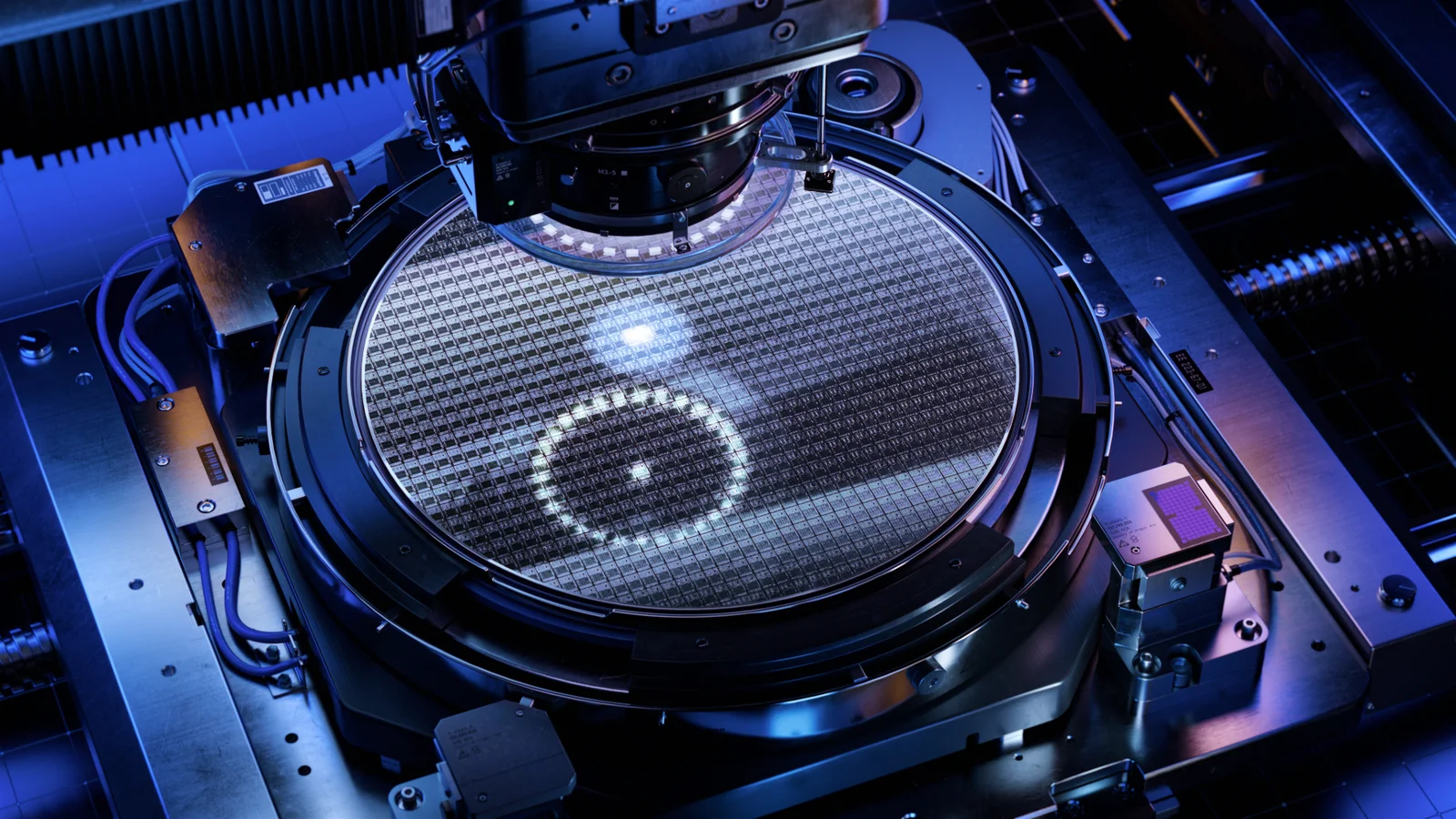
Lithography is the step in chipmaking where a machine etches microscopic circuit patterns onto a silicon wafer using light. ASML is the only company that makes extreme ultraviolet (EUV) lithography machines capable of printing the smallest, most advanced chip designs. Each scanner is about the size of a school bus and can cost more than $400 million. Every leading-edge chipmaker depends on ASML for that equipment, including TSMC, Samsung and Intel (INTC).
Source Foundry is not the only company chasing that monopoly. A separate startup called Substrate has said it is building an X-ray-based lithography system using particle accelerators that it claims could handle 2-nanometer-class chip production at a fraction of EUV's cost. Neither company has shipped equipment to a chipmaker yet.
The Source Foundry bet lines up with something already visible in Situational Awareness's public filings. The fund's 13F for the first quarter of 2026 showed a new ASML put position with a notional value near $494 million on 374,100 shares, a position that did not exist in any earlier filing. A 13F reports options at the value of the underlying stock, so the $494 million figure overstates what the fund actually put at risk. The fund also held a smaller $6.1 million ASML common stock stake the same quarter. Betting on a company built to challenge ASML while also holding puts against the stock points to one view: ASML's lithography monopoly is a real vulnerability, not a permanent moat.
Days after a near-collapse
The $500 million commitment lands about a week after Situational Awareness nearly did not survive. Aschenbrenner married Avital Balwit in Carmel, California, on July 31. She is chief of staff to Anthropic chief executive Dario Amodei, and the two met at the FTX Future Fund.
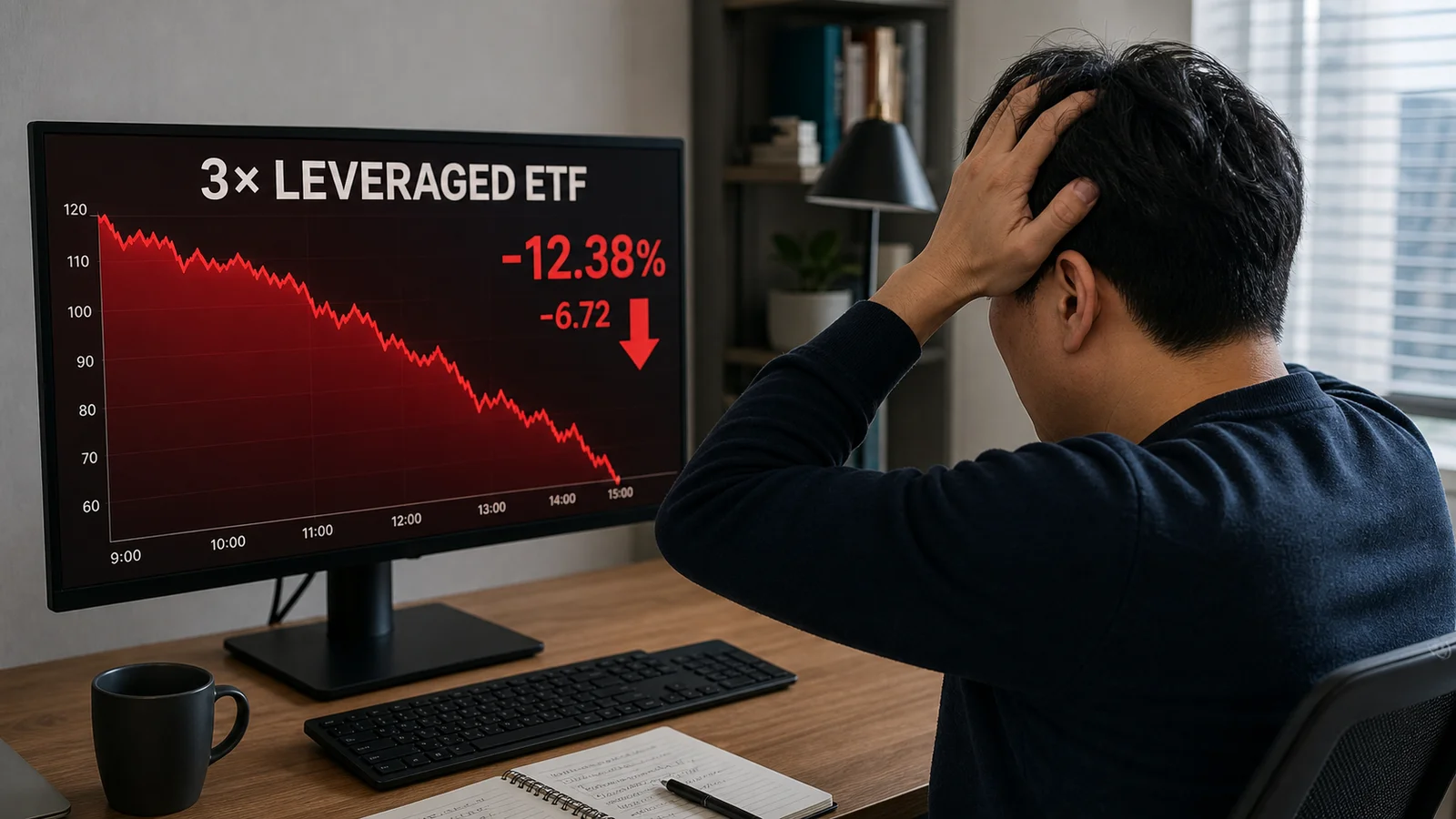
The fund had grown to $45 billion at its peak on leveraged bets in names like CoreWeave and SK Hynix, using leverage as high as four times its capital. SanDisk, Nebius and Bloom Energy are three of the fund's largest disclosed holdings. Each fell more than 30% in July, and SanDisk was down nearly 47%. Prime brokers Bank of America, Goldman Sachs and JPMorgan Chase pressed the fund to meet margin calls. Fortune reported that traders who had identified the fund's known positions shorted them, pushing prices down further. On Thursday, July 30, Ken Griffin's Citadel bought a large block of the fund's public stock holdings at what Fortune put as more than 10% below market value. The fund's assets fell from $45 billion to about $10 billion, a loss of 67% for the month even as it stayed up 80% for the year.
What it means for ASML
ASML has not commented publicly on Source Foundry. Its near-term business looks secure: EUV lithography took more than two decades and tens of billions of dollars to develop, and qualifying a new supplier takes years. A week after a collapse that cut its assets from $45 billion to $10 billion, the fund chose to put $500 million into a bet against ASML's monopoly instead of sitting it out.
This article is for informational purposes only and is not investment advice.